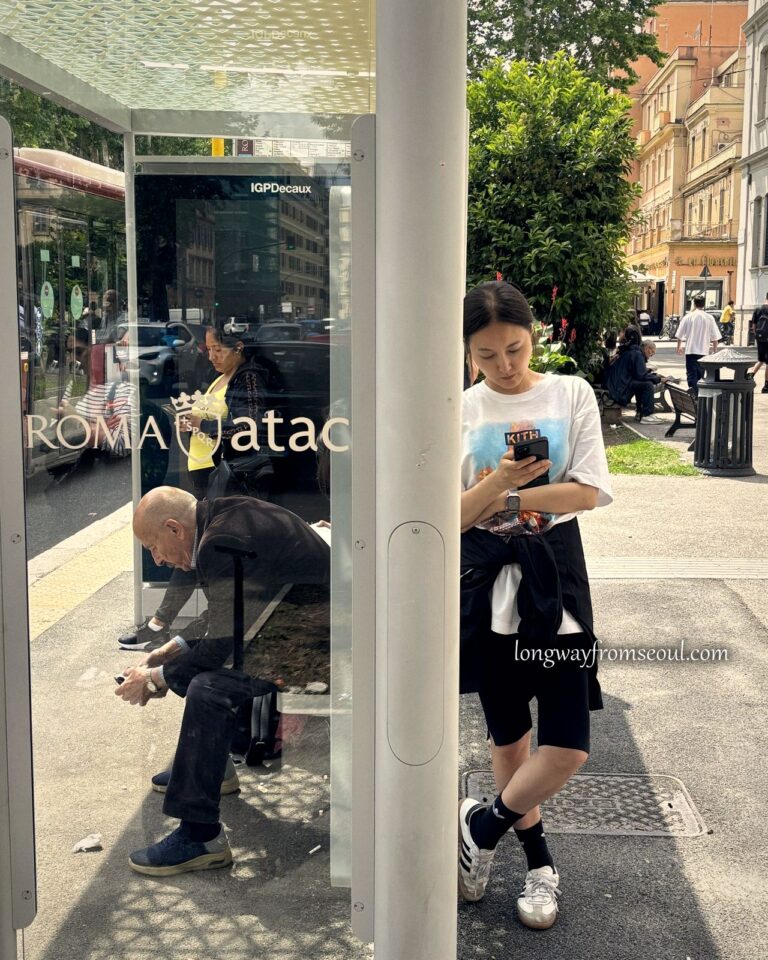
One Day Walking Across Rome: Vatican to the Spanish Steps
The host said there was a café next door. That’s all he said. It turned out to be the whole day’s beginning.
We slept the sleep of people who had crossed the planet the day before — deep, dreamless, gone. (If you missed how we got here: thirteen hours in the air, then the airport bus.) And in the morning, we walked ten steps from the door and pushed open the glass of a small Italian café in Prati.
I don’t know what I expected. Not this.
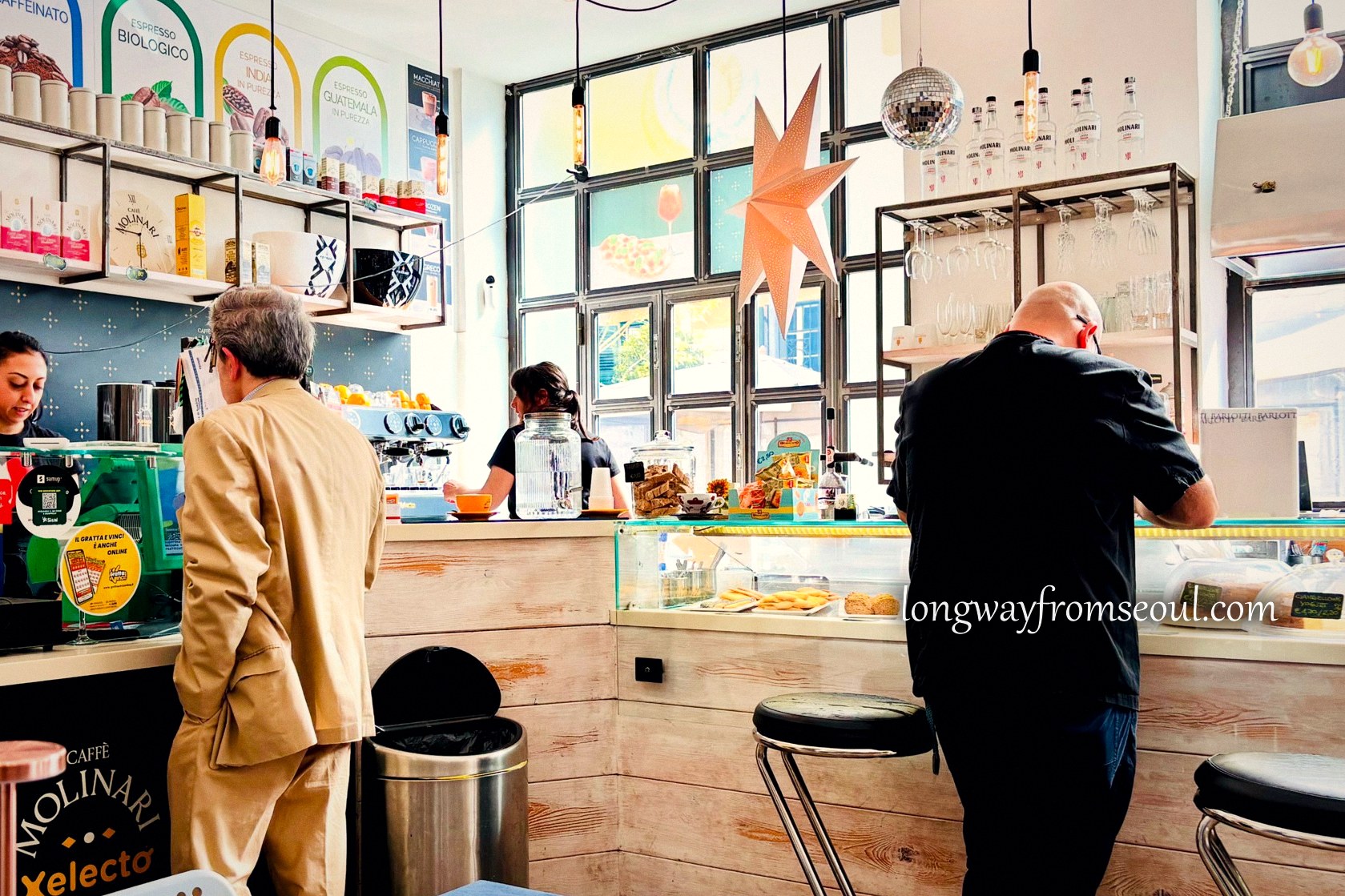
The place ran like the living room of the whole neighborhood. Men came in, said something to the barista, threw back an espresso standing at the bar — one motion, gone in four seconds — said something else, laughed, left. Nobody sat. Nobody scrolled. It was 9:25 in the morning and the room was doing the thing a neighborhood does when it actually knows itself.
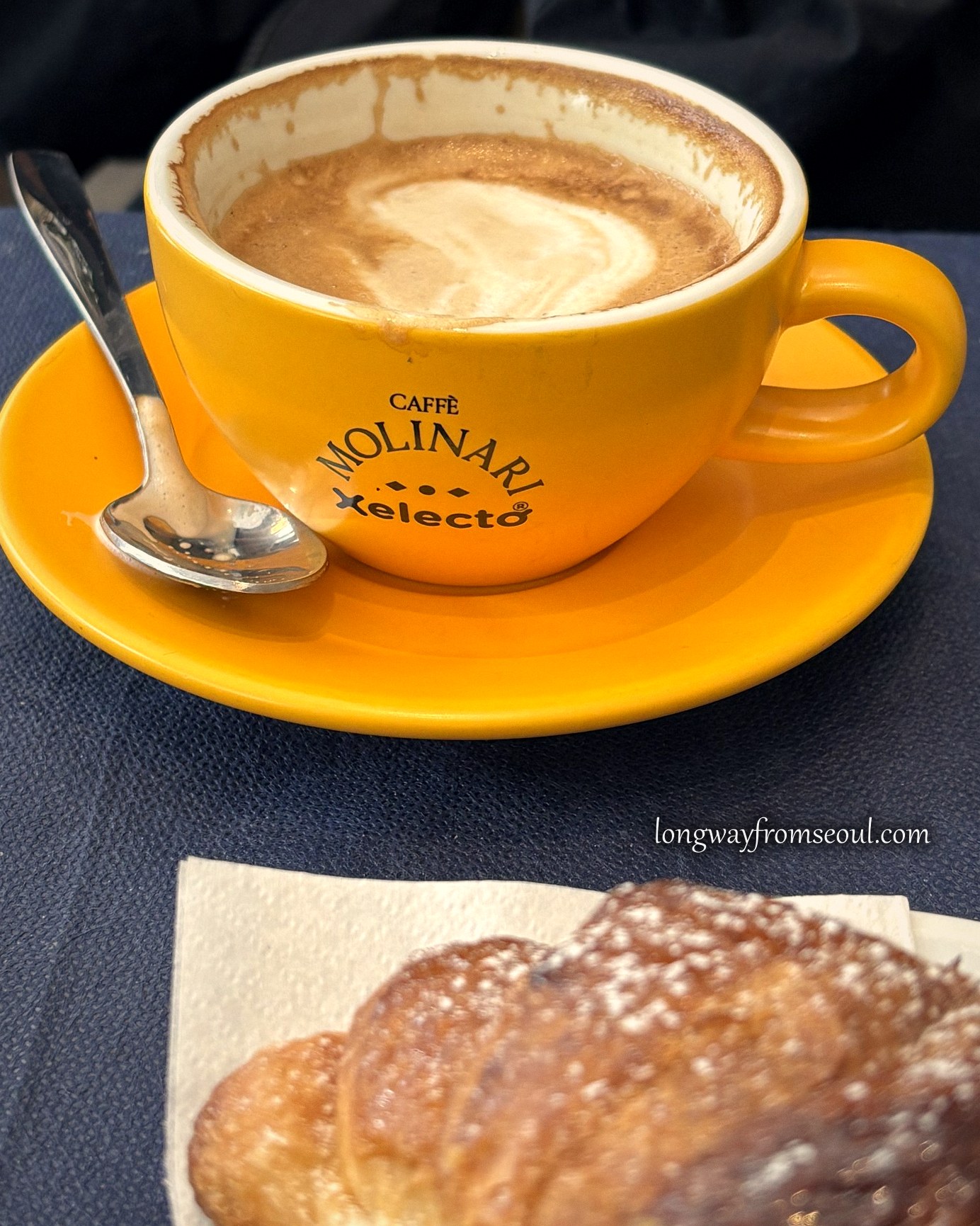
Hr and I took a caffè latte and a cornetto and some bread whose name I still don’t know. The sun came through the window at the angle that only exists in a city you’ve never woken up in before. Strangers were kind for no reason. I felt myself land — not in Rome, exactly. Just land.
We decided to walk. All of it. You have to walk a city first, before it will explain itself to you. Maps give you distance. Feet give you the shape.
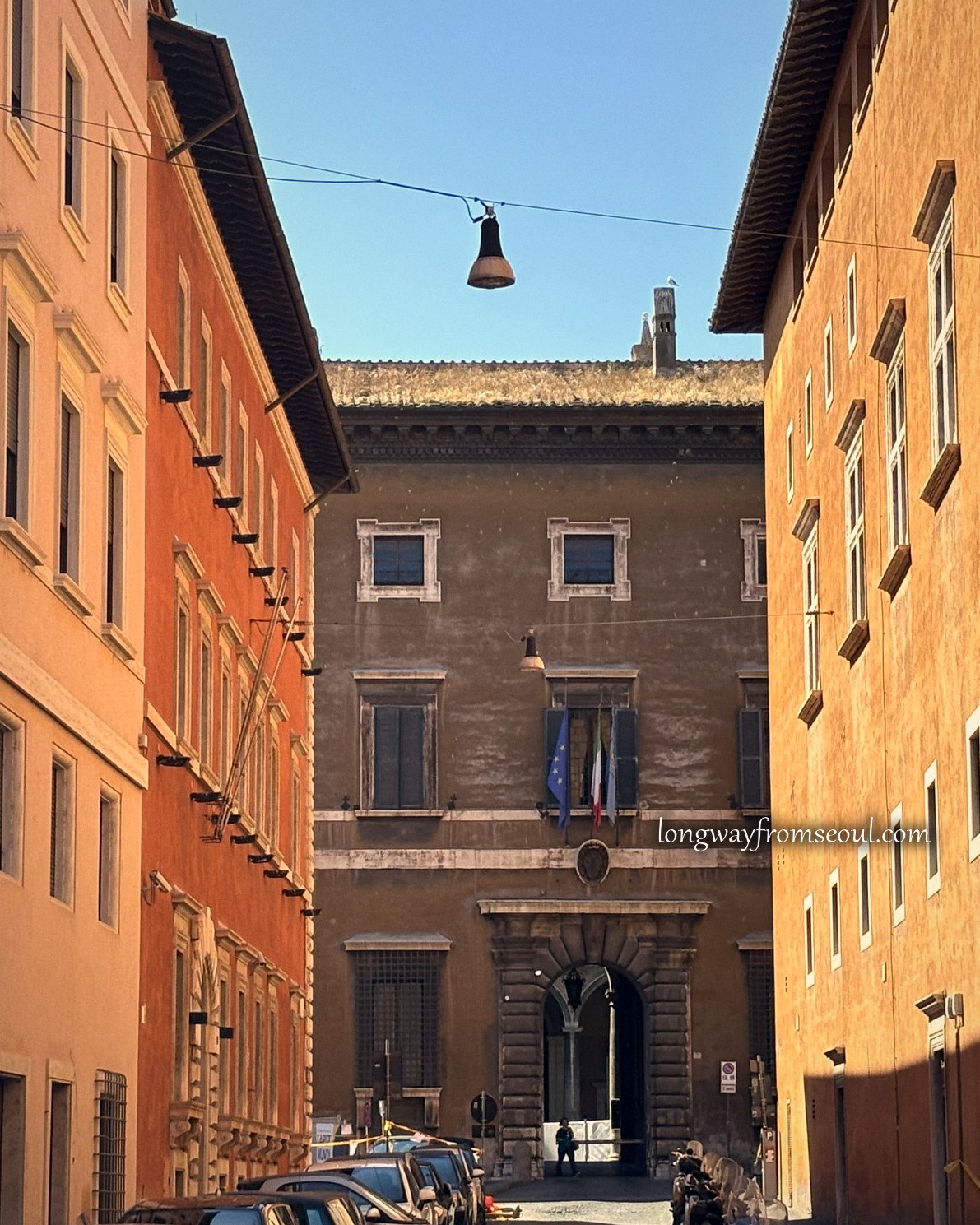
The city was full of nuns
We walked south and the streets narrowed and then opened, and there was St. Peter’s.
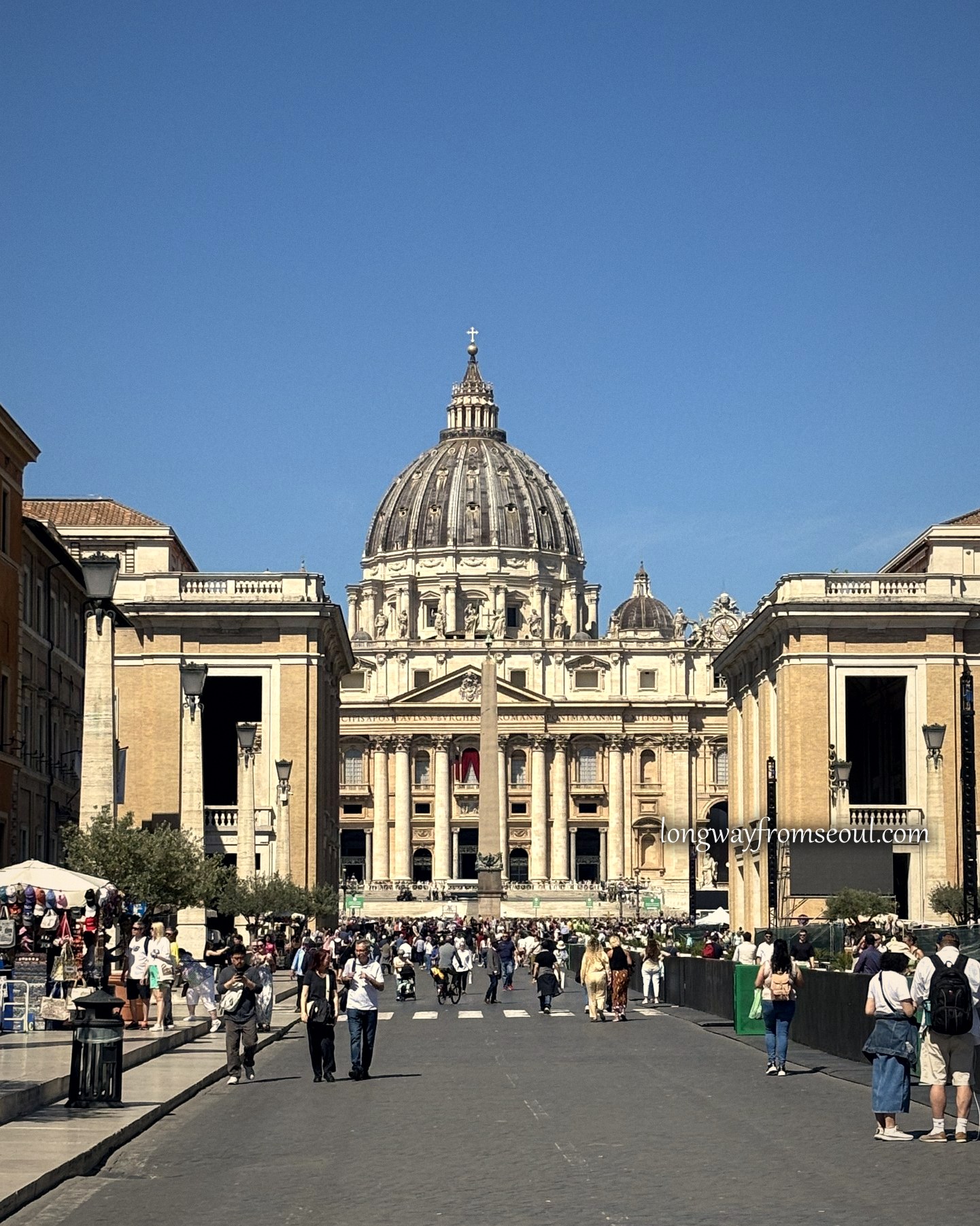
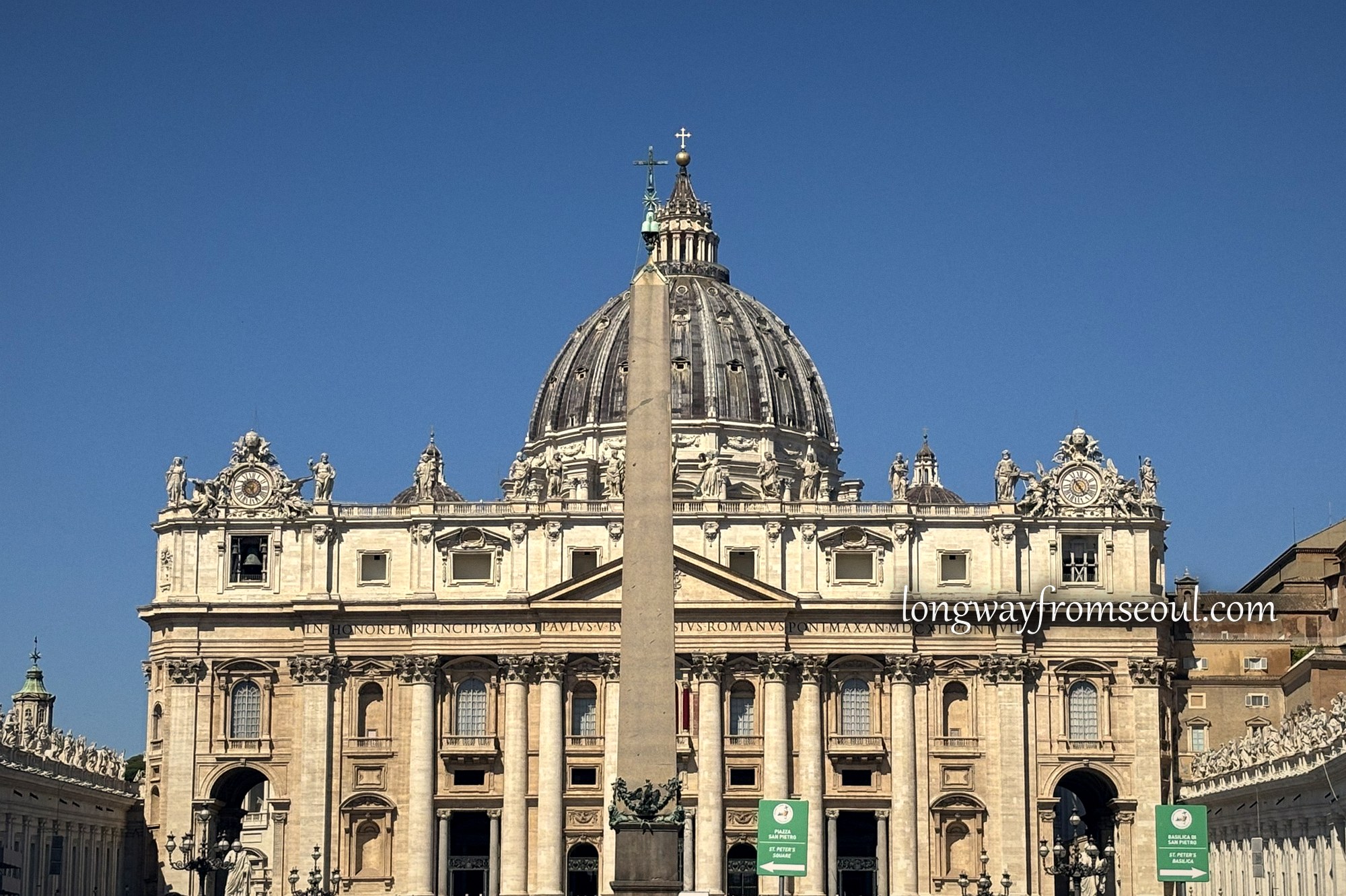
And everywhere — nuns. Priests. Pilgrims moving in small, purposeful clusters. Faces from every country on earth, all pointed the same direction.
We had walked into Rome four days after the conclave chose a new pope. Leo XIV had been elected on 8 May 2025; we were standing there on the 12th. We hadn’t planned this. We hadn’t even really known. We had simply booked a flight months ago and arrived into a week the Catholic world had been holding its breath for.
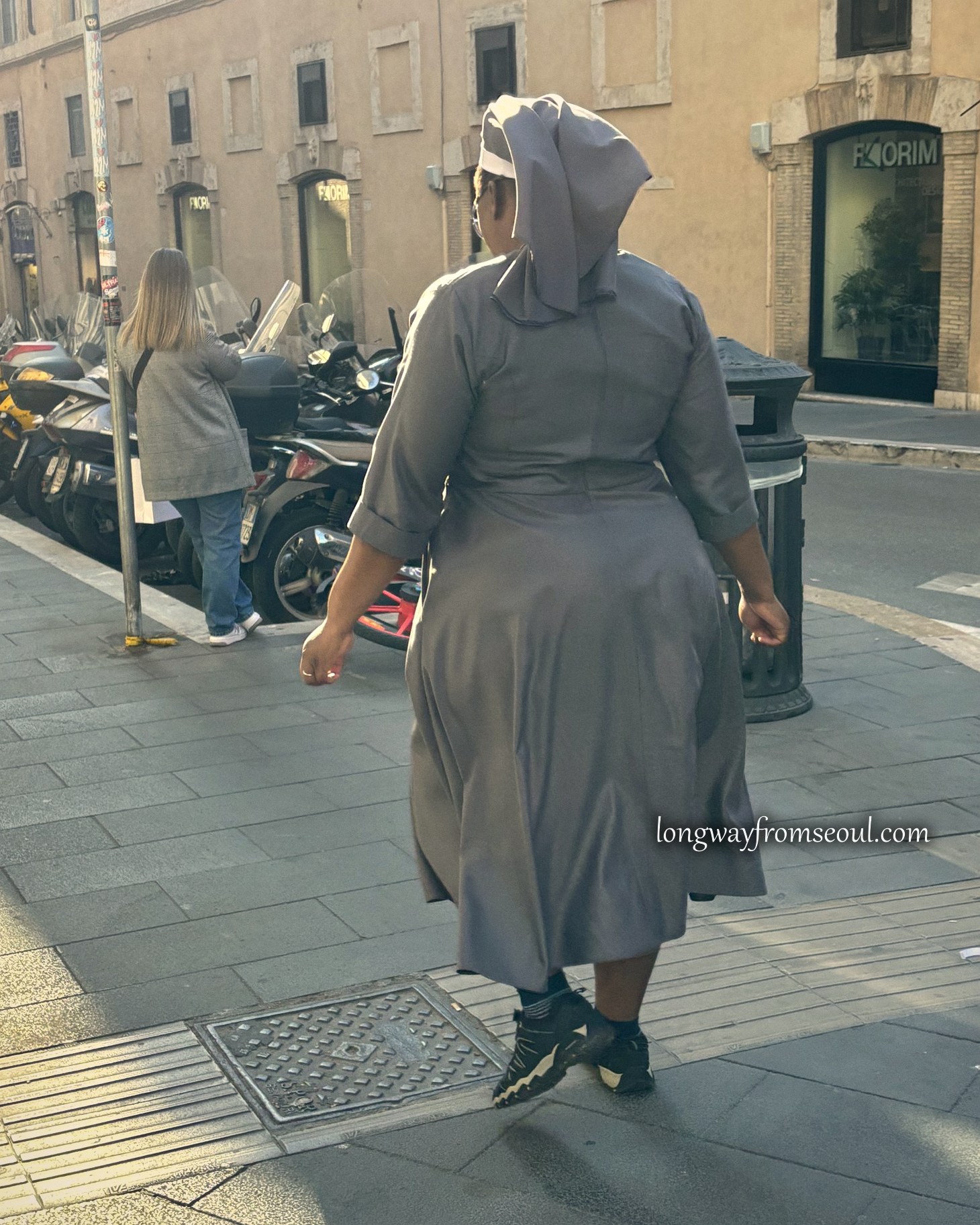
I kept photographing them all day — the nuns, mostly. I still can’t fully explain why. Something about a person who has decided, completely, what their life is for. In a city built on that decision, repeated for two thousand years, they didn’t look like visitors. They looked like the building’s own thought, walking around.
Then the sky did something
We came around toward Castel Sant’Angelo around noon, and jets went over.
They pulled smoke behind them — green, white, red. The Italian flag, laid across the sky over the castle, over the river, over us.
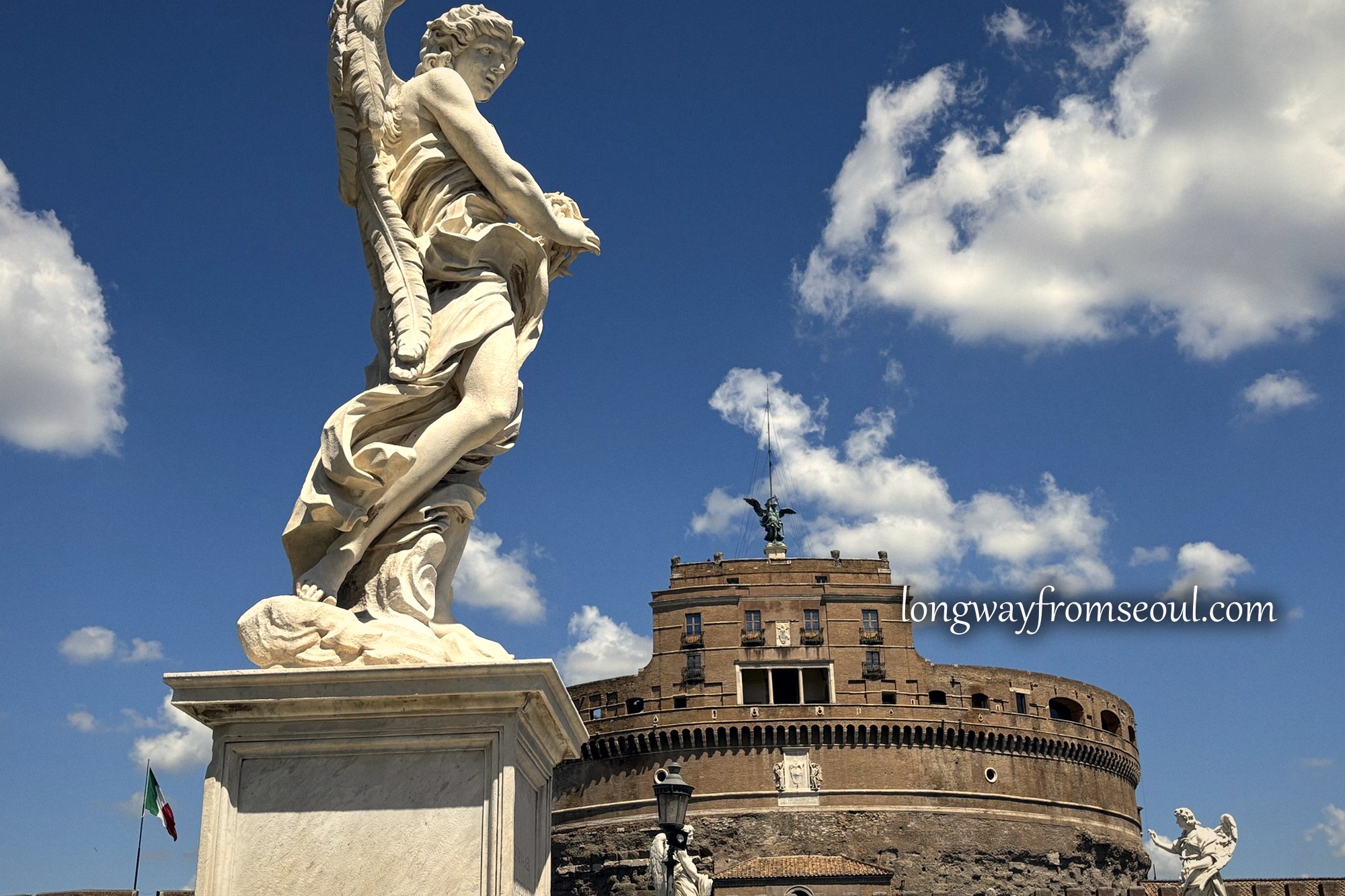
I know it wasn’t for me. I know that. But I stood in the middle of a bridge in a country I’d landed in fifteen hours earlier and watched a nation write its own colors above my head, and some part of me that has no interest in facts said: they came to say congratulations.
I let it. Some mornings you should let it.
Pantheon, espresso, tiramisu
We crossed the river and kept walking into the old center until the streets did that thing Rome does — tighten, tighten, tighten, and then hand you the Pantheon like it’s nothing.
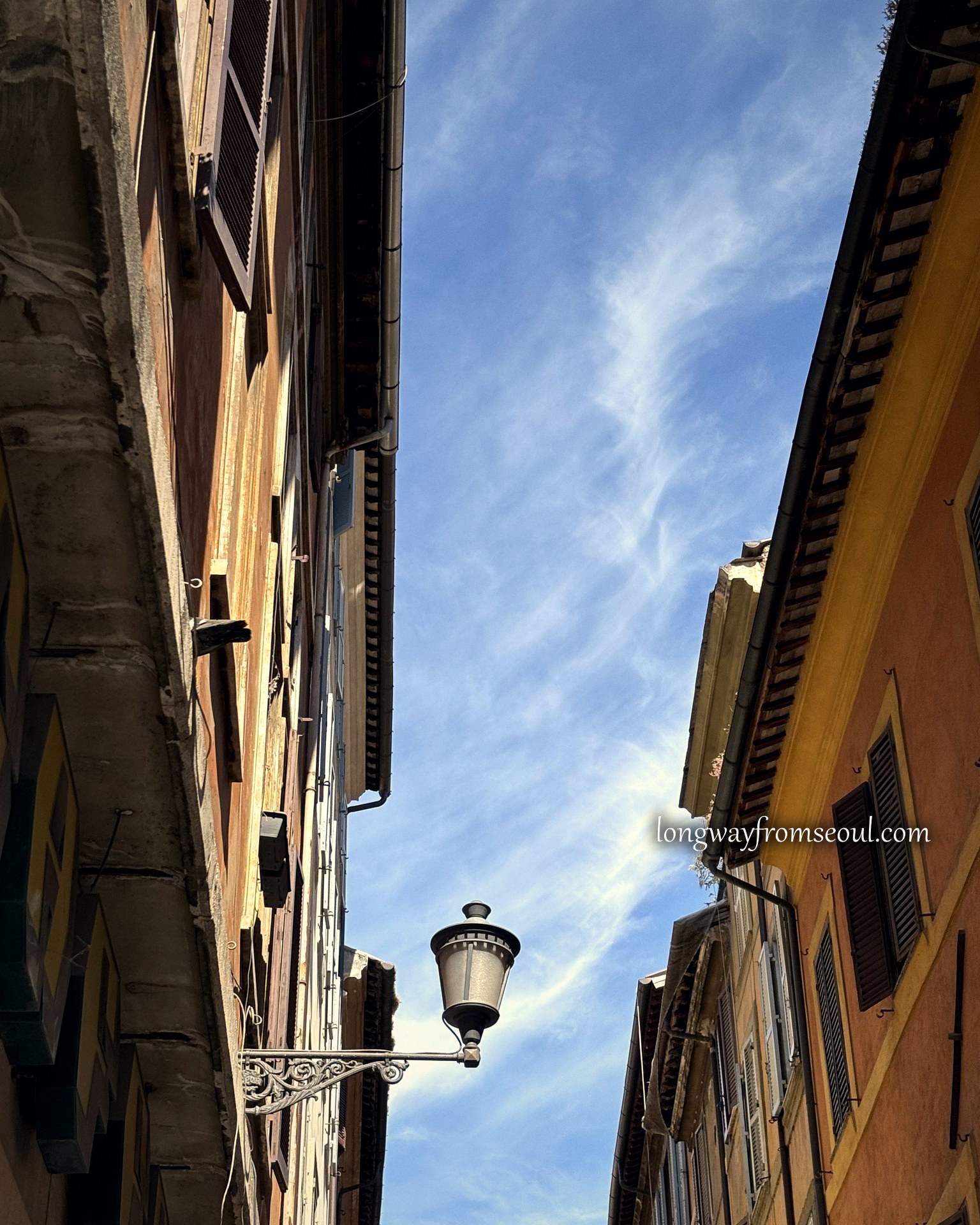
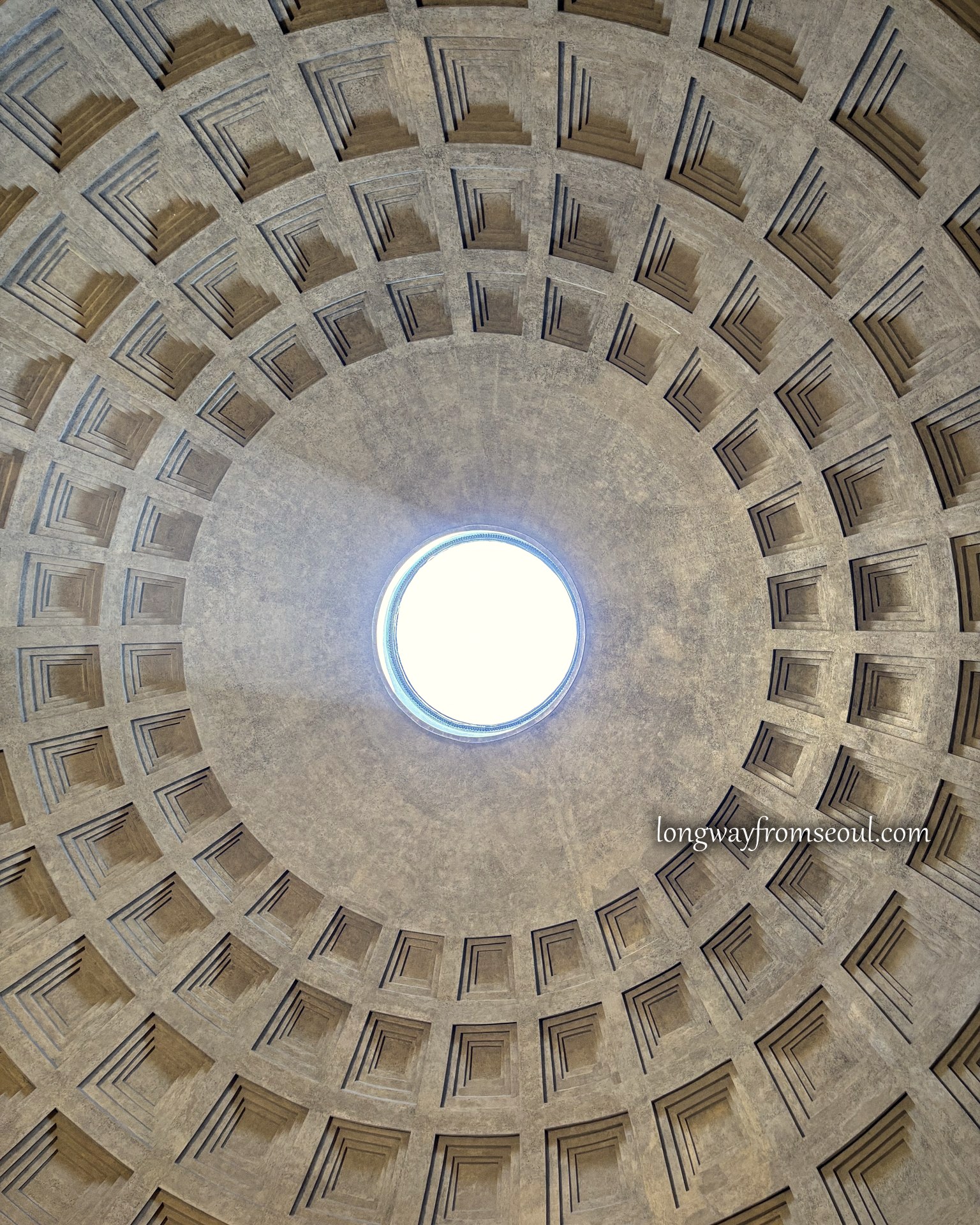
Like it’s just been standing there since the year 126 waiting for you to turn the corner. It is still the largest unreinforced concrete dome in the world, and the hole in the top of it is open — no glass, nothing. When it rains inside the Pantheon, it simply rains inside the Pantheon.
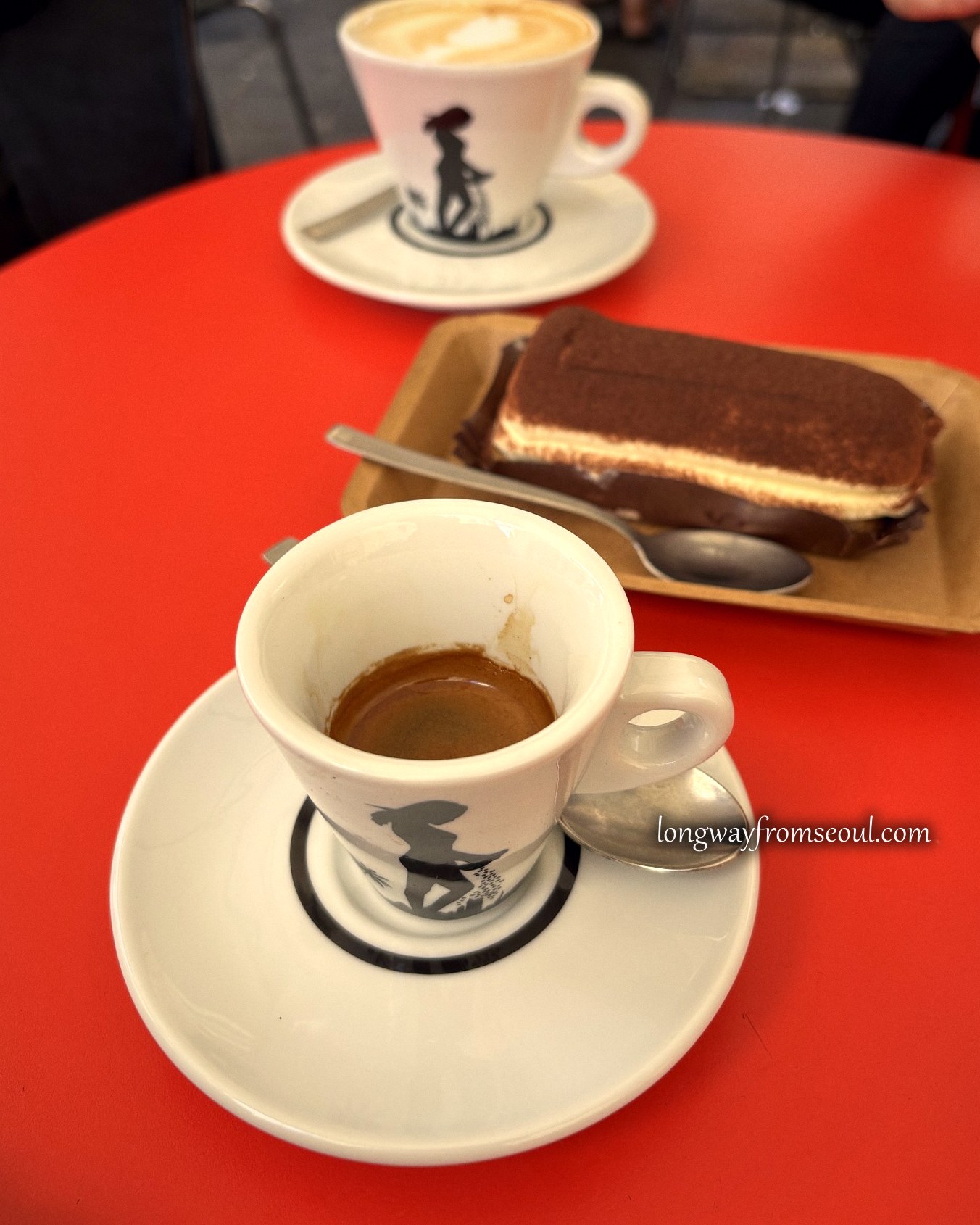
Afterward: a café near the Pantheon, an espresso, a tiramisu. I’m not going to pretend to be above it. It was very good and I was very happy.
The steps stop you
Trevi Fountain, packed, roaring, worth it anyway.
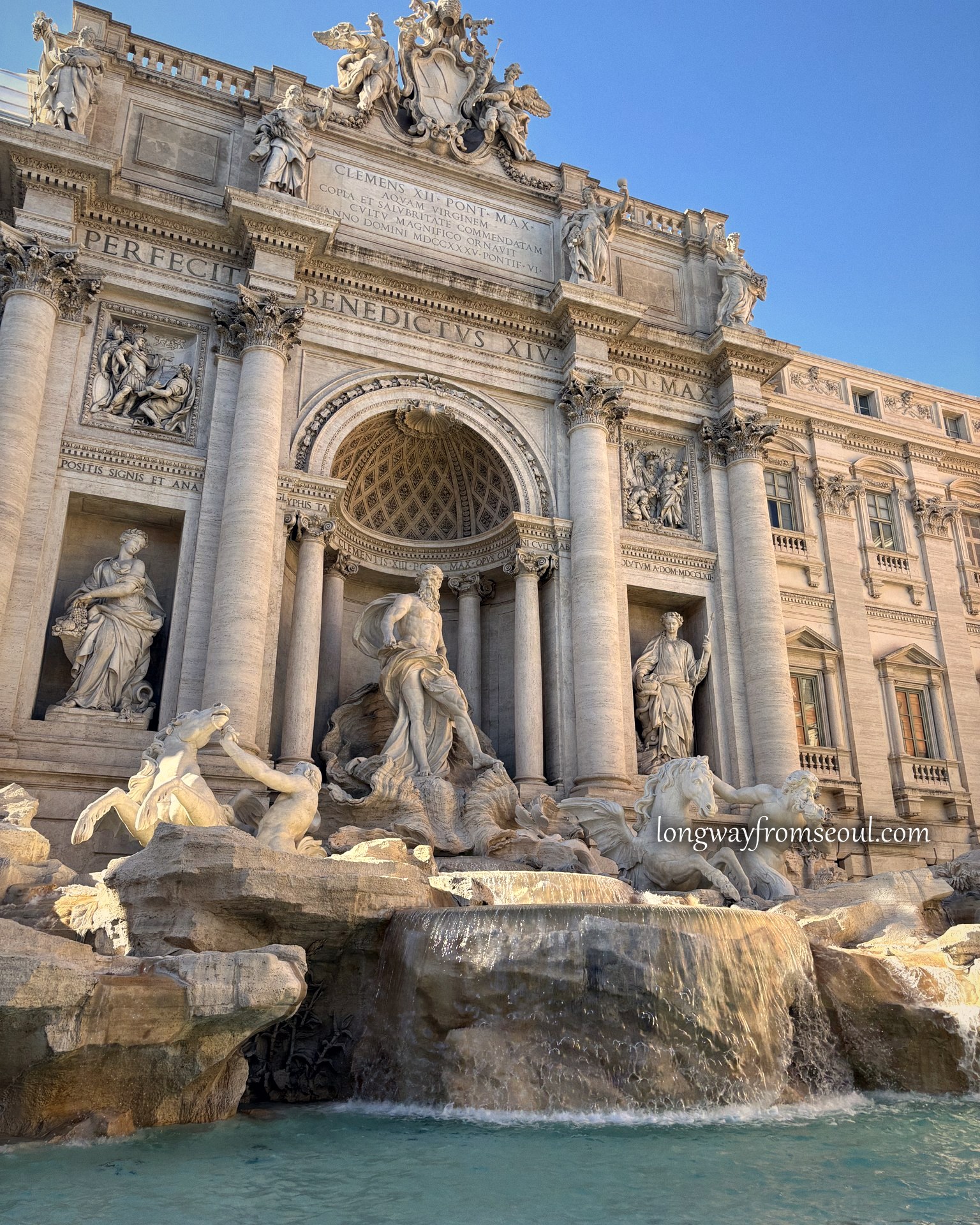
And then the Spanish Steps, and the thing I hadn’t expected: I stopped.
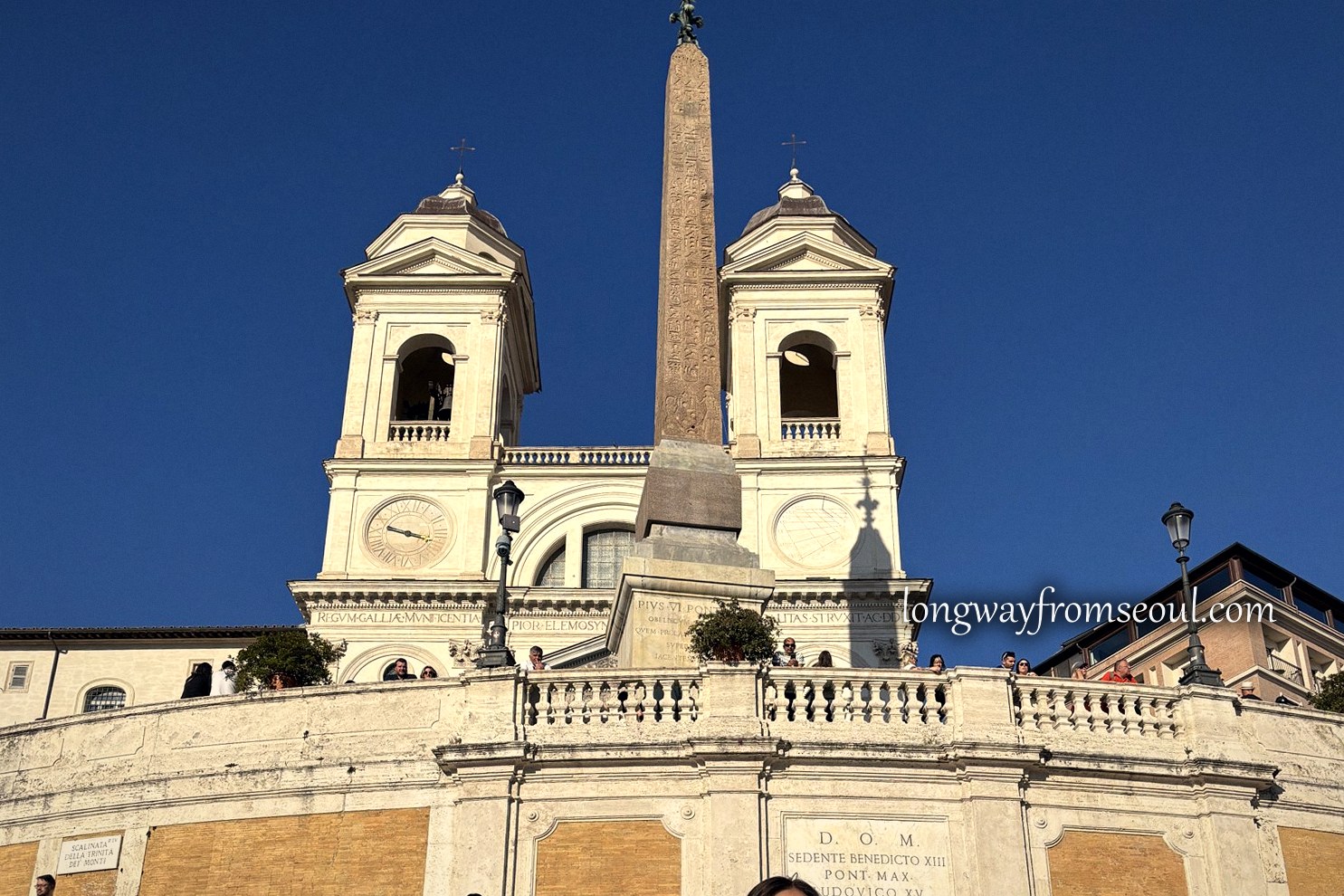
This is where Audrey Hepburn ate the gelato. Everybody knows that. It’s the most photographed staircase in the world and I was standing on it, and what went through my head wasn’t Hepburn at all. It was:
Yesterday I was at work.
Not metaphorically. Recently. I had been at a desk, in Seoul, inside the machinery of a normal life, and now I was standing in the exact light of a city that has been beautiful for two thousand years, and both of those things were true about the same person.
I don’t think I have a clean thought about it. I just know I stood there longer than I meant to.
Sunset, and everyone in it
Rome’s sunset is famous, so we climbed up with everyone else who’d heard the same thing.
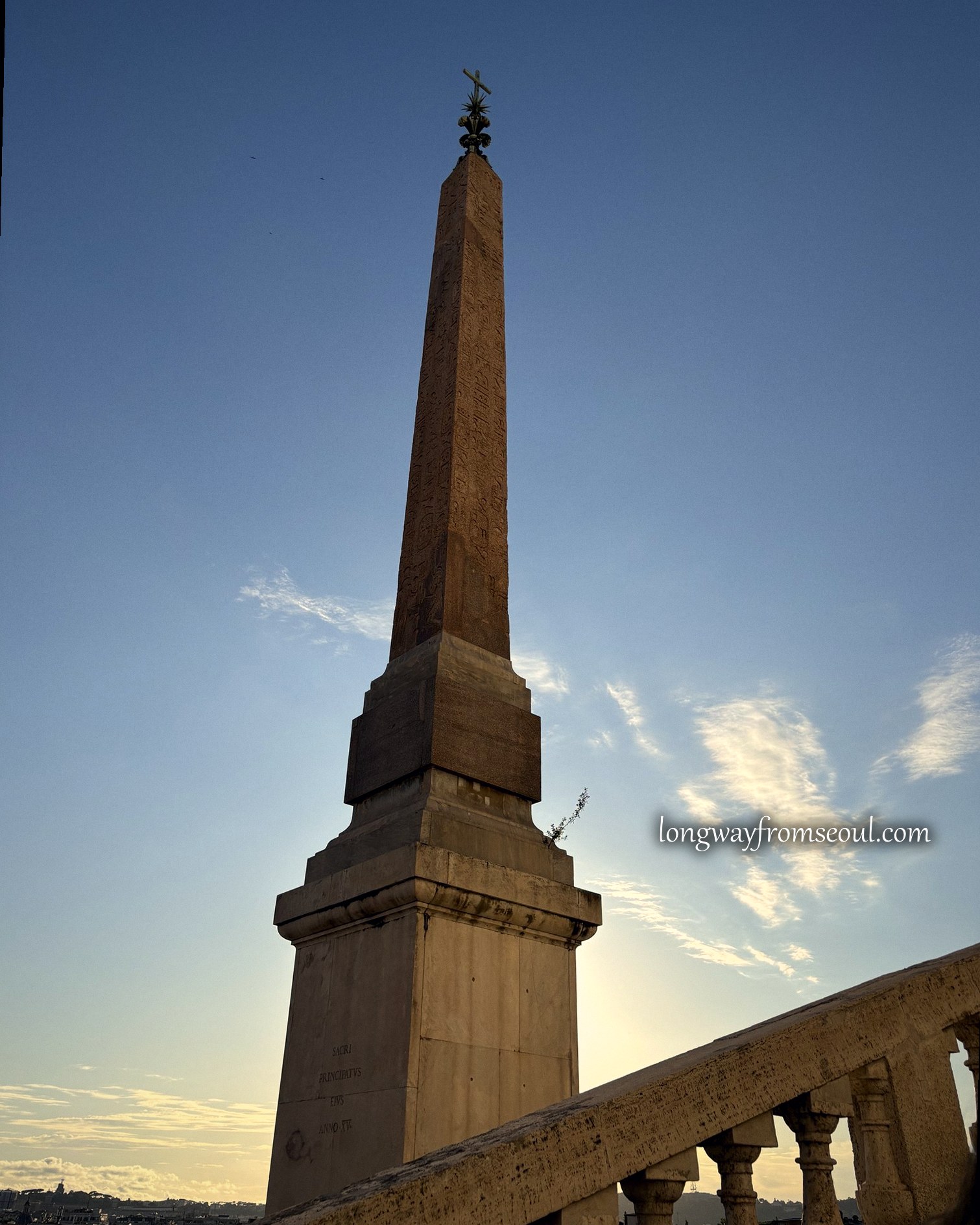
And this is the part I keep coming back to. Couples. Families. Friends. People entirely alone and completely fine about it. All of us facing the same direction, into the same orange, and every single one of us thinking something different. You could feel it — a whole crowd being quietly, separately moved.
That’s the thing nobody tells you about famous views. The view is not the point. The point is standing inside a hundred people’s private weather at the same time.
The walk home
Somebody was roasting chestnuts on the street. Of course they were.
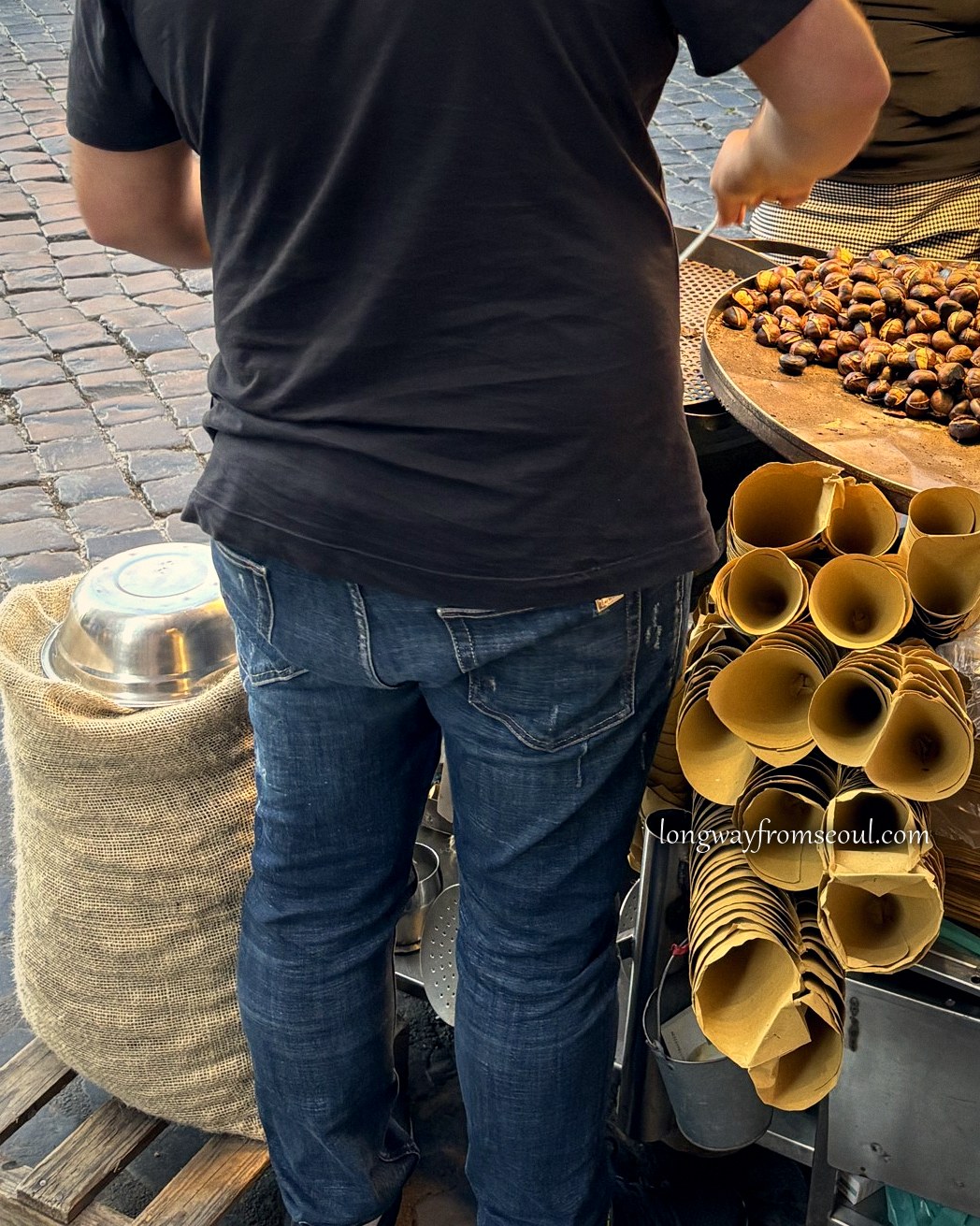
The light went, the city turned blue and then dark, and Rome at night became a completely different animal — warmer, louder, more itself.
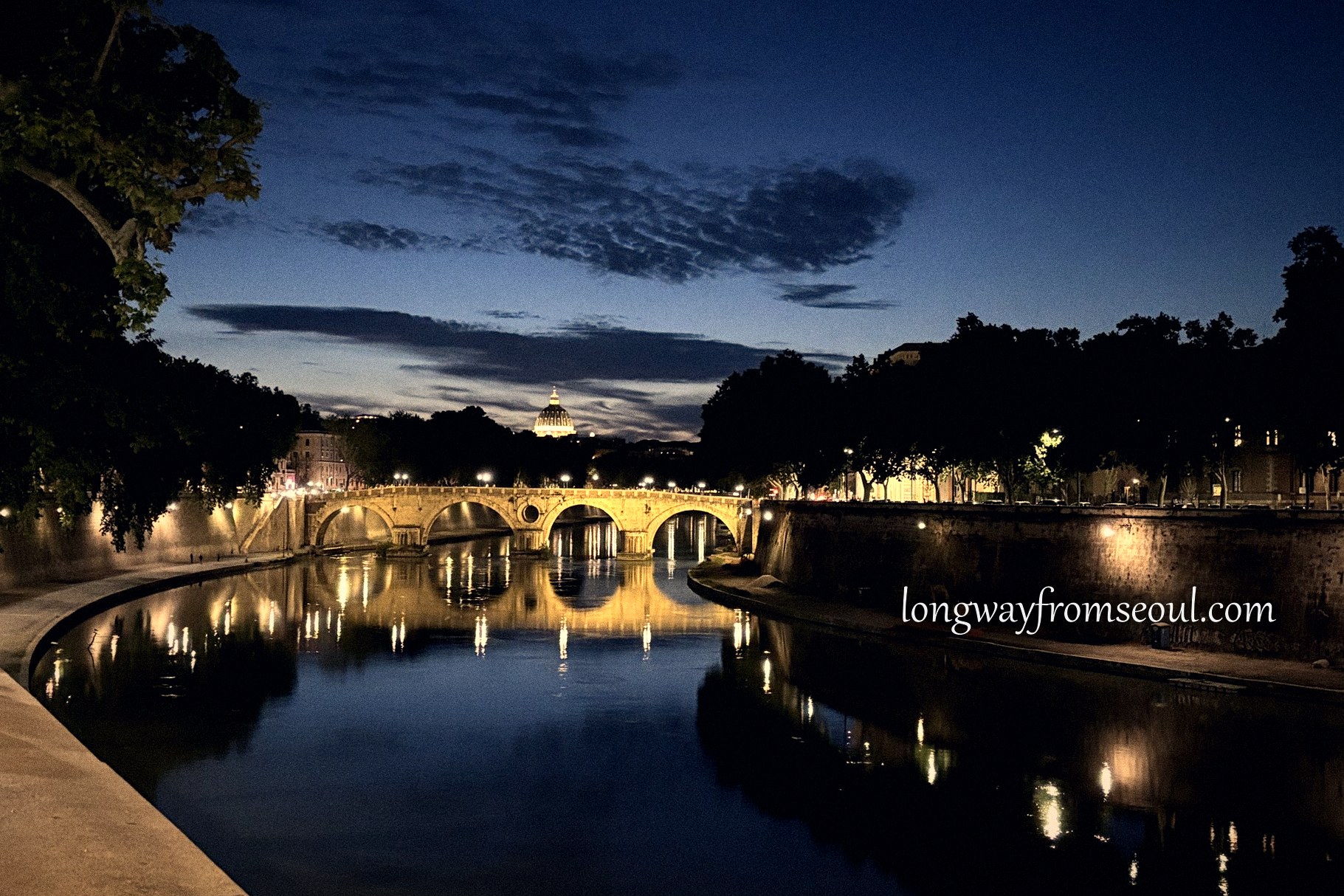
We found the spaghetti place we’d heard about, ate like people who had walked across a city, and then walked all the way back — past the Vatican again, quieter now, lit and enormous and finally almost empty — and home.
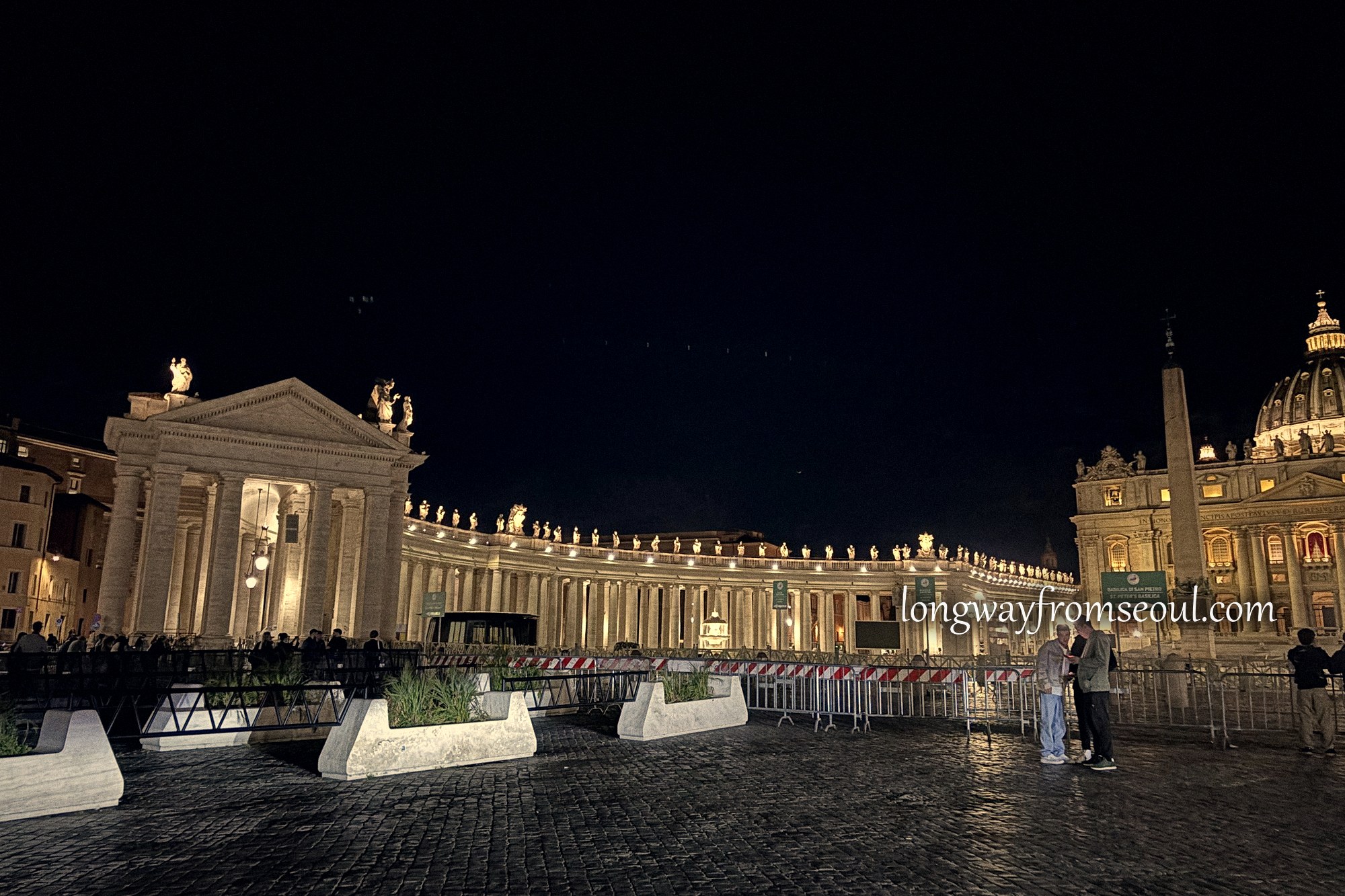
Fifteen kilometres of Rome. One day. It’s the only way I know to meet a city.
If you want to walk Rome the way we did
The route, in one line
Prati → St Peter’s → Castel Sant’Angelo → Pantheon → Trevi → Spanish Steps. Roughly 5 km one way, a full unhurried day on foot, no transport needed. We covered about 15 km by the time we got home.
Do the café properly
Order at the bar and drink standing (al banco). It’s how Italians do it, it’s faster, and it’s dramatically cheaper — an espresso standing is usually around €1–1.50, while the same coffee at a table can cost several times more, because Italian bars are allowed to charge a separate table service fee. Don’t order a cappuccino after 11am unless you want a look. Don’t ask for it to go.
Wear real shoes
I cannot stress this enough. Roman cobblestones (sampietrini) are hand-cut basalt blocks with gaps between them. They will end you in anything fashionable.
You can’t sit on the Spanish Steps
Since 2019, sitting or lounging on the Spanish Steps is prohibited under Rome’s urban police regulations and it is actively enforced — officers will whistle you off. You can walk them, stand on them, photograph them. But the “sit and eat gelato like Audrey” shot is not happening. Nobody tells you this before you go.
The Pantheon now charges admission
It was free for most of its history. Since 2023 there is a standard entry ticket for visitors, with reductions and exemptions (including for residents of Rome and for Sunday Mass attendance). Check the official ticketing site before you go rather than buying from a reseller in the square.
Go up for sunset
The top of the Spanish Steps at golden hour is free, and it is one of the great free experiences in Europe. Get there before the sun actually starts dropping — the crowd builds fast, and the good edge positions go first.
A note on timing
We happened to be there days after a conclave, which meant enormous crowds around the Vatican and an atmosphere I’ll never see again. If you’re visiting during a major Church event, expect queues, security, and something genuinely extraordinary in the air. If you want quiet instead, avoid it — and go early. St Peter’s Square before 8am is a different planet.
Rome for the first time: the things we wish we had known
These are the rules that actually cost people money or time in Rome, checked against the official sources in September 2026. Rome changes them more often than the guidebooks get reprinted.
1. The Trevi Fountain is no longer free to stand at
Since 2 February 2026, non-residents pay €2 to enter the inner perimeter at the basin, and that area is capped at 400 people at a time. The paid access runs 09:00–22:00 daily, and 11:00–22:00 on Mondays and Fridays.
The fountain itself is still free to look at from the piazza, and the basin is free outside those hours — so before 09:00 or after 22:00 you can walk right down without a ticket. Under-fives, visitors with disabilities and Rome residents are exempt. Buy only from the official site or the QR codes posted at the fountain. There is no such thing as a skip-the-line Trevi ticket; anyone selling you one in the street is selling you nothing.
Our photographs here were taken in May 2025, before the fee existed. If you go now, budget the €2 or go early.
2. Buy Colosseum tickets from one website and no other
A standard adult ticket is €18, plus a €2 non-refundable booking fee online, and it covers the Colosseum, Roman Forum and Palatine Hill. The official seller is CoopCulture at ticketing.colosseo.it. Everything else is a reseller charging you a markup for the same timed slot. Entry is by timed slot and they do sell out — book before you fly, not the night before.
3. Shoulders and knees, or you do not get in
The Vatican dress code is not a suggestion. Shoulders and knees must be covered for St Peter’s Basilica, the Vatican Museums and the Sistine Chapel, and it is enforced at the door — no shorts, no sleeveless tops, no short skirts. In May it was already hot enough that this mattered. A light scarf in your bag solves it.
4. There are two different free Sundays, and people mix them up
- First Sunday of the month — Italian state sites are free. That is the Colosseum, the Forum, the Palatine, and the national museums.
- Last Sunday of the month — the Vatican Museums are free. The Vatican is its own state and runs its own scheme.
Both are free and both are extremely busy. Free means queueing, not strolling in.
5. Water is free, everywhere, and it is good
Rome has more than 2,500 public drinking fountains — the cast-iron ones with the curved spout, called nasoni (“big noses”). They run cold, clean, drinkable water year round, for free. Put your finger over the end of the spout and it arcs up into a drinking jet.
Carry one empty bottle and you will refill it four or five times on a walking day. We did. In May that is the difference between enjoying the afternoon and giving up at two o’clock.
6. A line on your bill that says “coperto” should not be there
Most of Italy charges a coperto — a per-person cover charge. Lazio, the region Rome sits in, banned it (Regional Law 21/2006). Restaurants here may legitimately charge you for pane (bread) or add a servizio percentage, but either one has to be written on the menu before you order.
So: check the menu for those words when you sit down. If a charge appears on the bill that was never on the menu, you are entitled to question it. This is not about being difficult — it is about knowing that in Rome, specifically, the rule is different from the rest of Italy.
7. One bus ticket, 100 minutes, but only one metro ride
The standard single ticket (BIT) is €1.50 and lasts 100 minutes. In that window you can change buses and trams as many times as you like — but you may pass through the metro barriers once. Validate it the moment you board; an unvalidated ticket is treated as no ticket, and the inspectors do come.
Honestly, though: the centre of Rome is walkable end to end. We covered the whole of this day on foot and used no transport at all.
8. The tourist tax is real, and it is collected in cash at the door
Rome charges an overnight contributo di soggiorno of roughly €3 to €10 per person per night depending on the category of accommodation, capped at 10 consecutive nights. It is almost never included in what you paid online, and your host will ask for it on arrival or departure. It is not a scam and it is not negotiable — just have some cash for it.
All prices and rules above were checked in September 2026 against the operators’ own sites and Rome city sources. Rome revises these more often than you would think — confirm before you travel.
What I actually took home
People ask me what the best part of Rome was, and I never have a good answer, because the honest one sounds like nothing at all: a café at 9:25 in the morning where nobody sat down.
The Pantheon is nineteen hundred years old. It will be there when I am not. The thing that will not be there again is the particular Monday when the light came through a window in Prati at that exact angle, and a city I had never woken up in decided to be kind to me for no reason.
You can photograph the fountain. You cannot photograph the fact that yesterday you were at work.
That is what fifteen kilometres on foot buys you, and it is the one thing no itinerary can book for you in advance.
Day 3 is being written now
Two weeks of Italy, written one day at a time, from the photographs and the timestamps rather than from memory. No sponsored hotels, no borrowed pictures, no AI landscapes. Just where we actually were and what it actually cost.
The subscribe box at the bottom of this page is the only place I announce a new day. One email per story, nothing else, ever.
Start at the beginning: Day 1 — Fiumicino Airport to Rome by bus
Every photograph on this page is mine, taken on 12 May 2025 between 09:25 and 22:25, in the order you see them.