The Price at the Counter Was Not the Price on the Website
We had three days in Rome. On the fourth morning there was a car waiting for us at the airport, because my wife wanted to see the Amalfi coast, and that was reason enough.
What I did not know, standing in a kitchen in Prati at twenty past ten, was that the hardest part of the day would not be the four hundred kilometres. It would be ten minutes at a rental desk.
10:22 — the last morning in an apartment
The last morning in a rented apartment is a strange hour. You photograph rooms you will never see again — not because they are beautiful, but because for three days they were yours. The bed. The little kitchen. The corridor with the door at the end of it.
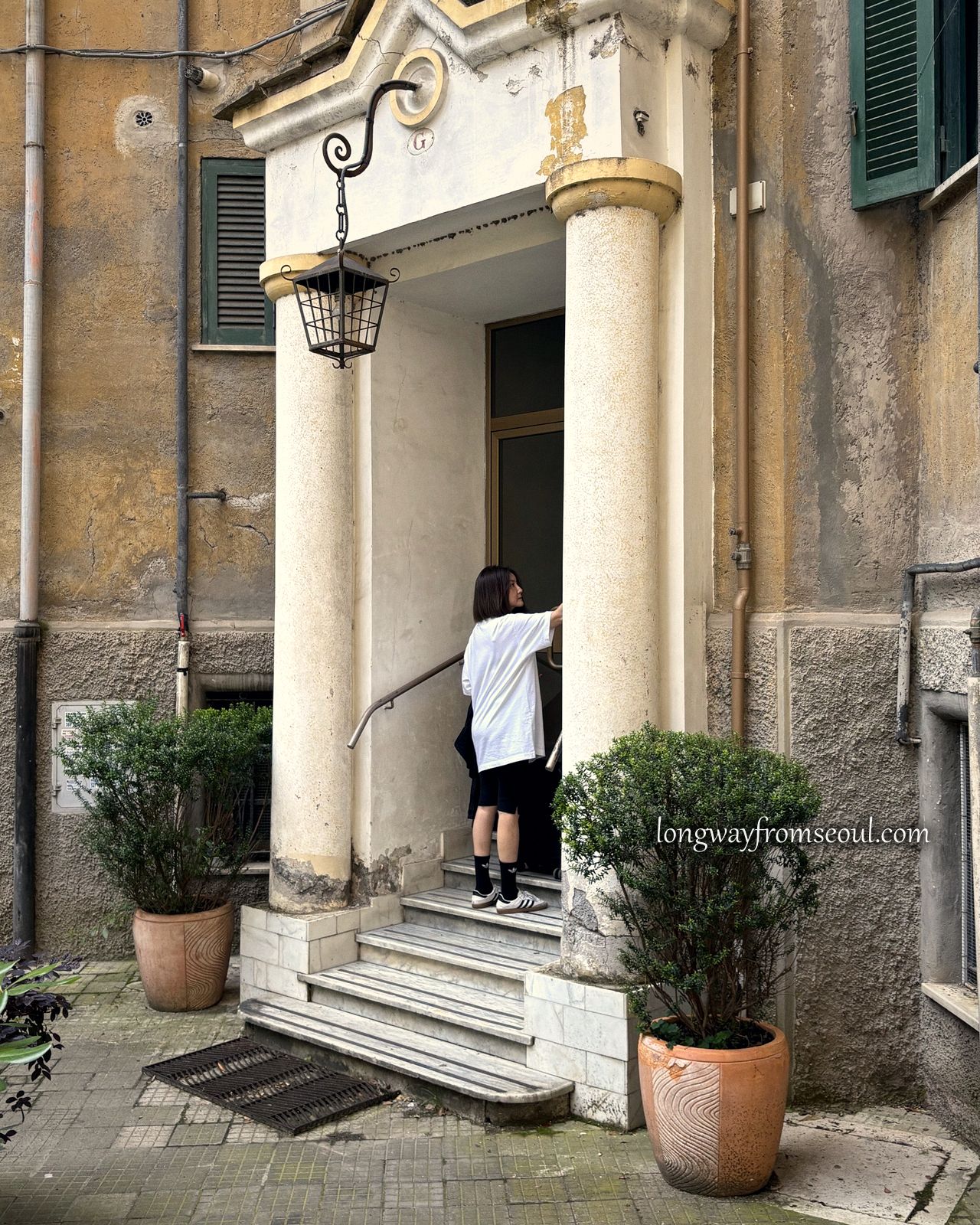
Our host had been kind in the way that costs a person nothing and means everything: the café next door on the first night, the right answer every time we asked. We left the keys on the table and said thank you twice, which in a language neither of us shared was all we had.
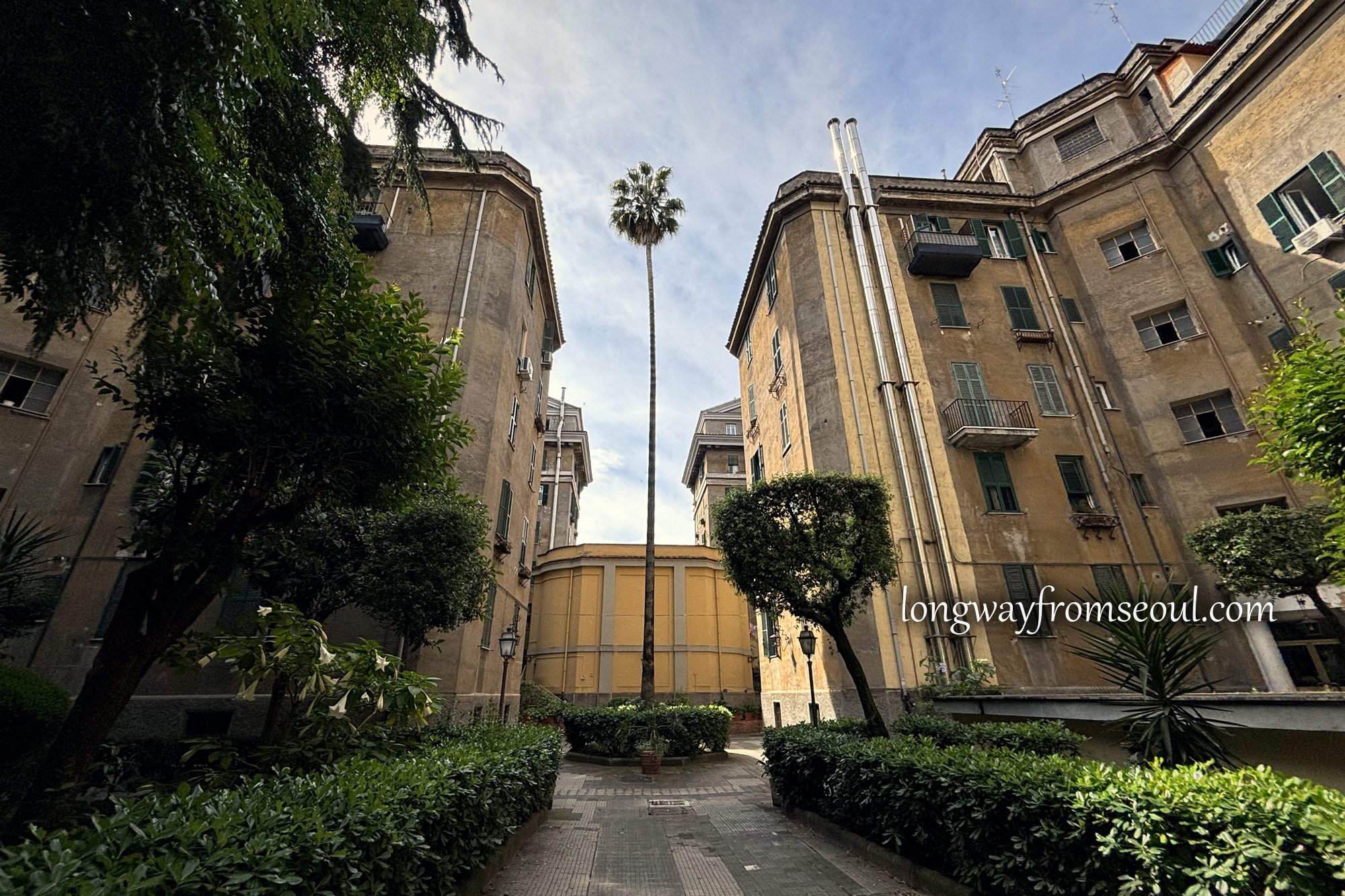
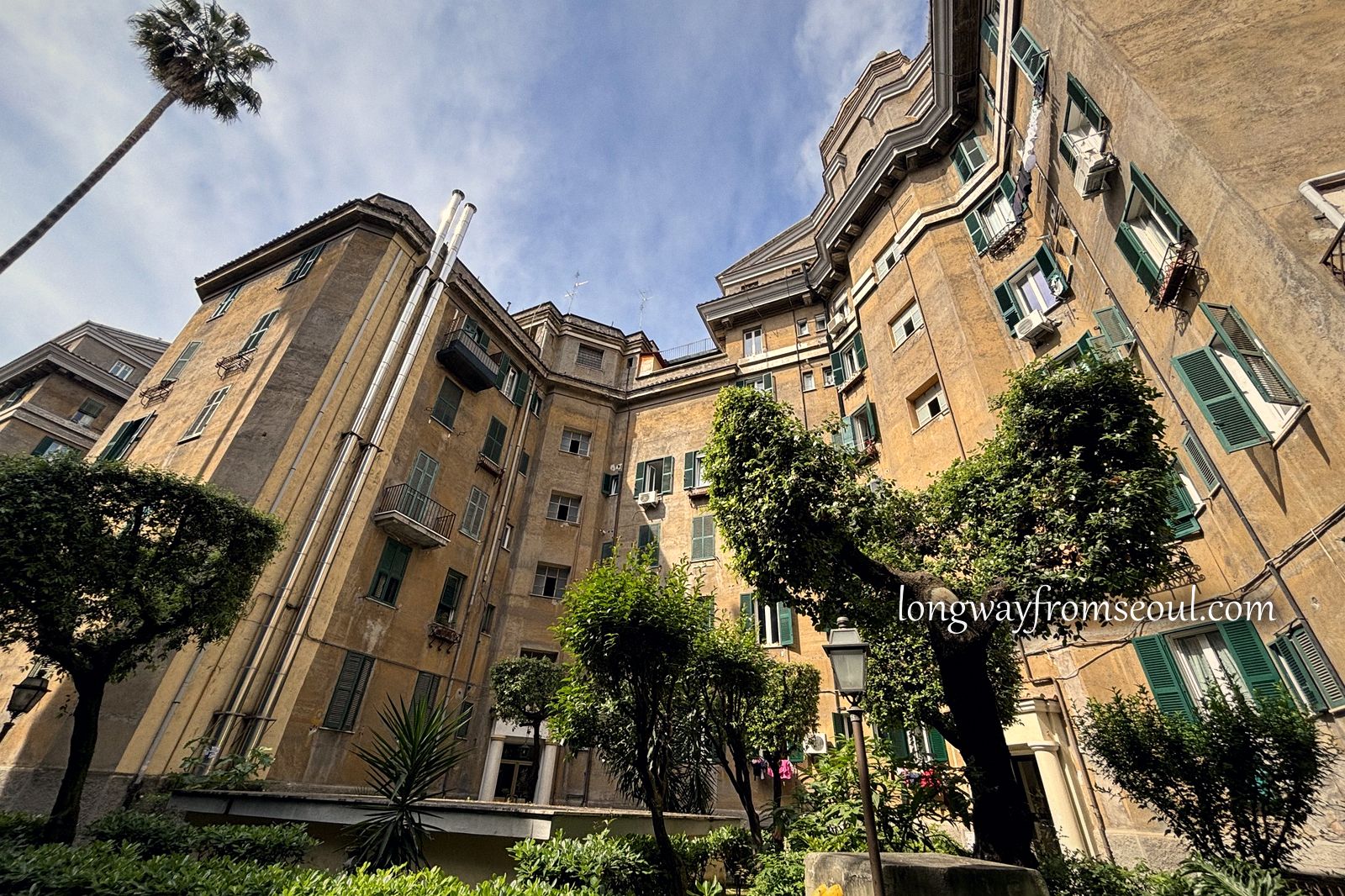
Then you carry the bags down through the courtyard, and the building gives you back to the street.
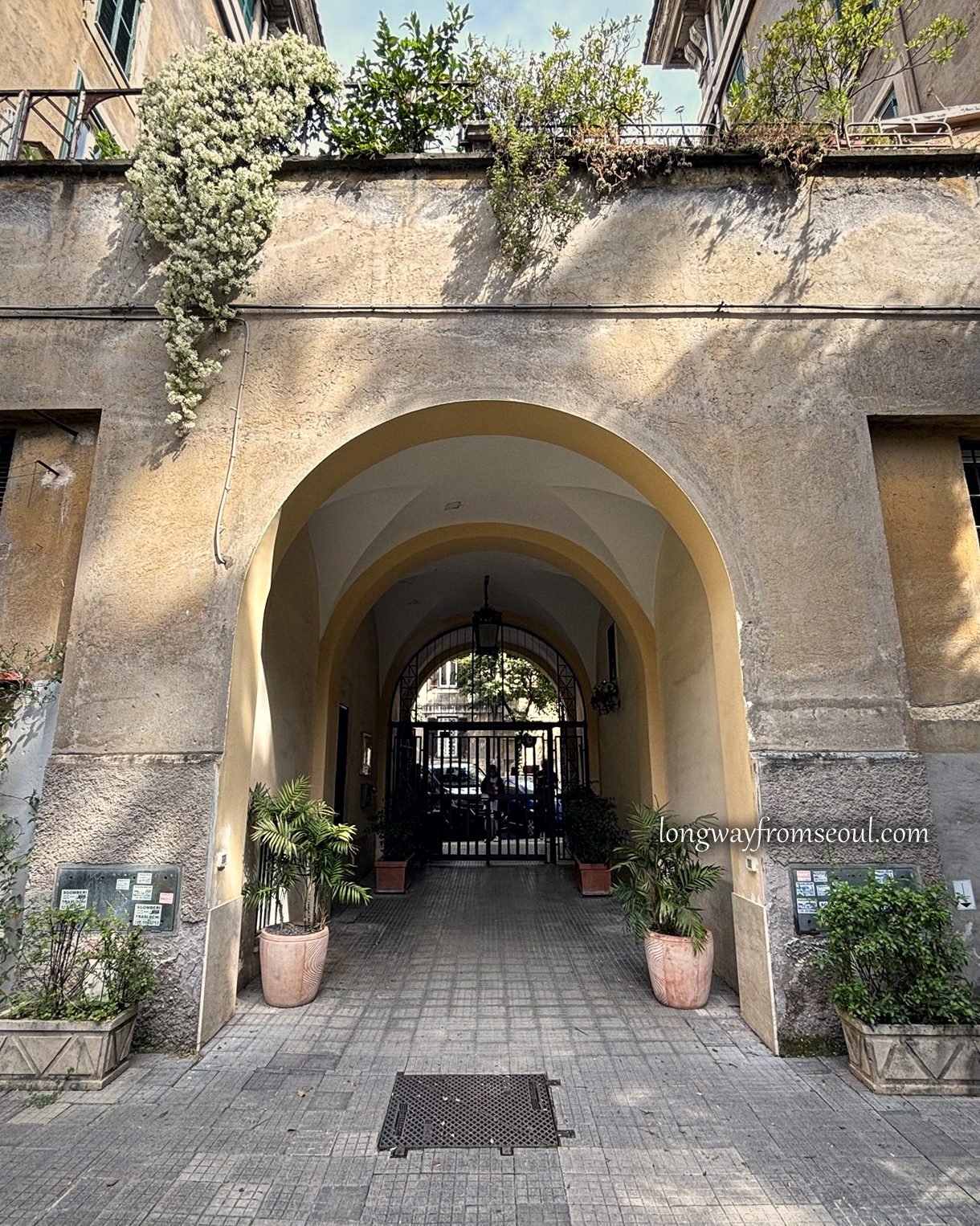
10:40 — the same yellow cup as the first morning
We took the bags to the café on the corner and ate the last Roman breakfast with the suitcases against our legs, the way you do when the day has a departure in it.
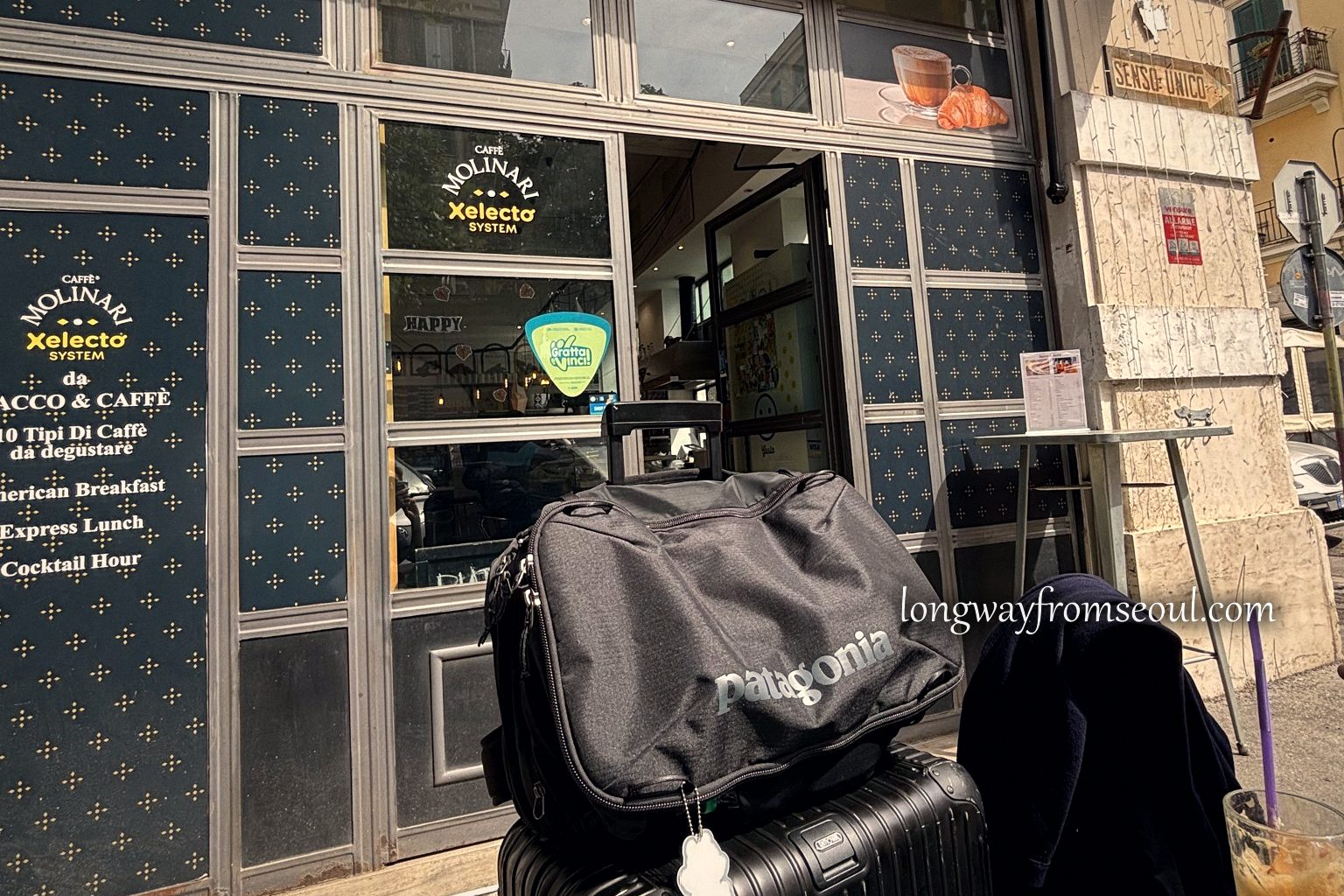
The cappuccino came in a yellow Caffè Molinari cup. The same yellow cup as the first morning, when we had no plan and fifteen kilometres ahead of us. I did not arrange that. Rome just does it.
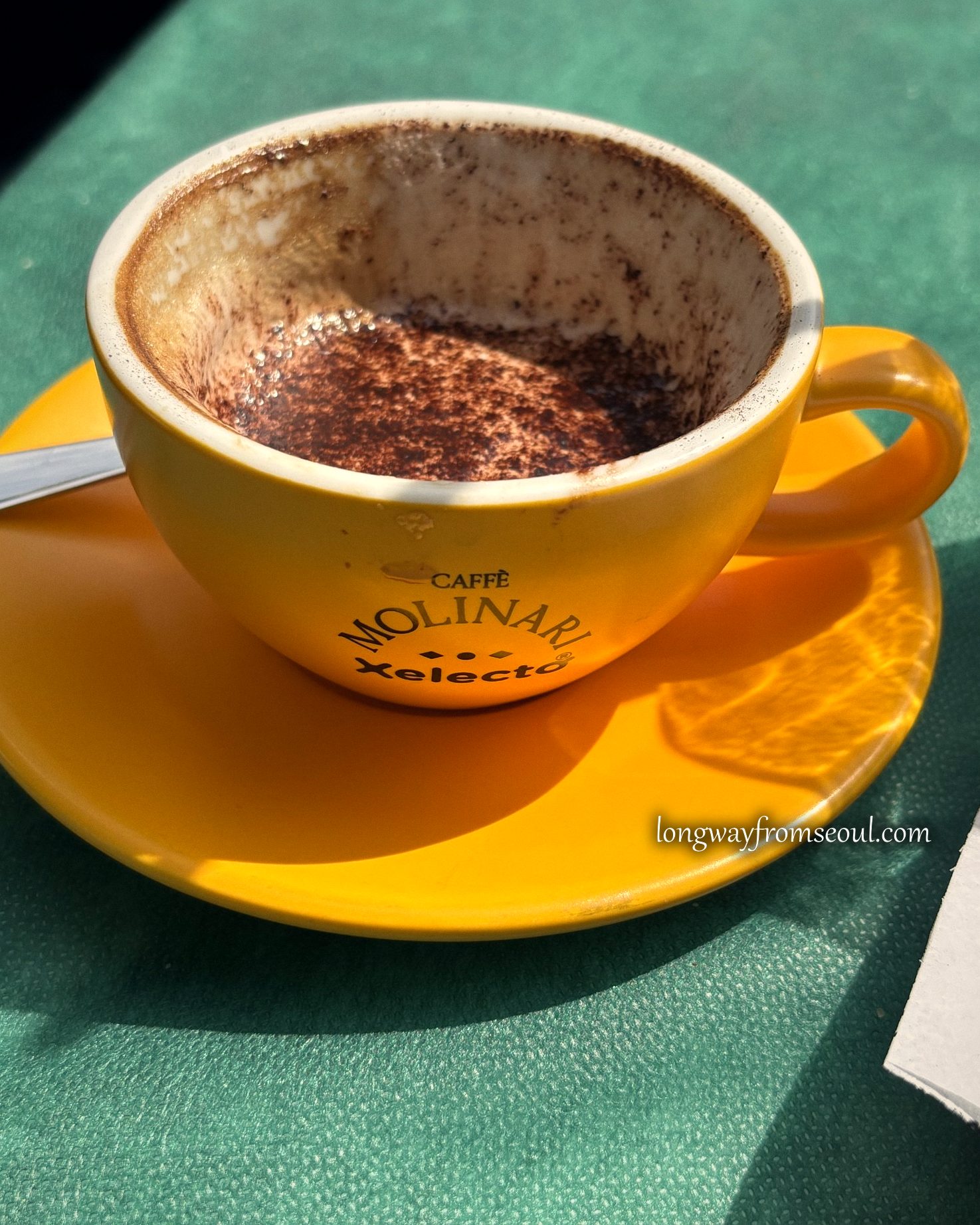
Rome, I will come back. You say it out loud, at a café table, to a city that is not listening. You say it anyway.
13:28 — two hours of being a person with a suitcase
Here is the part of a travel day that nobody photographs, and that I think is actually the best part.
Check-out is late morning. The car is not until the afternoon. So for two hours you are not a guest and not a traveller — you are just a person standing on a street in Rome with a bag, in a neighbourhood where nobody is on holiday.
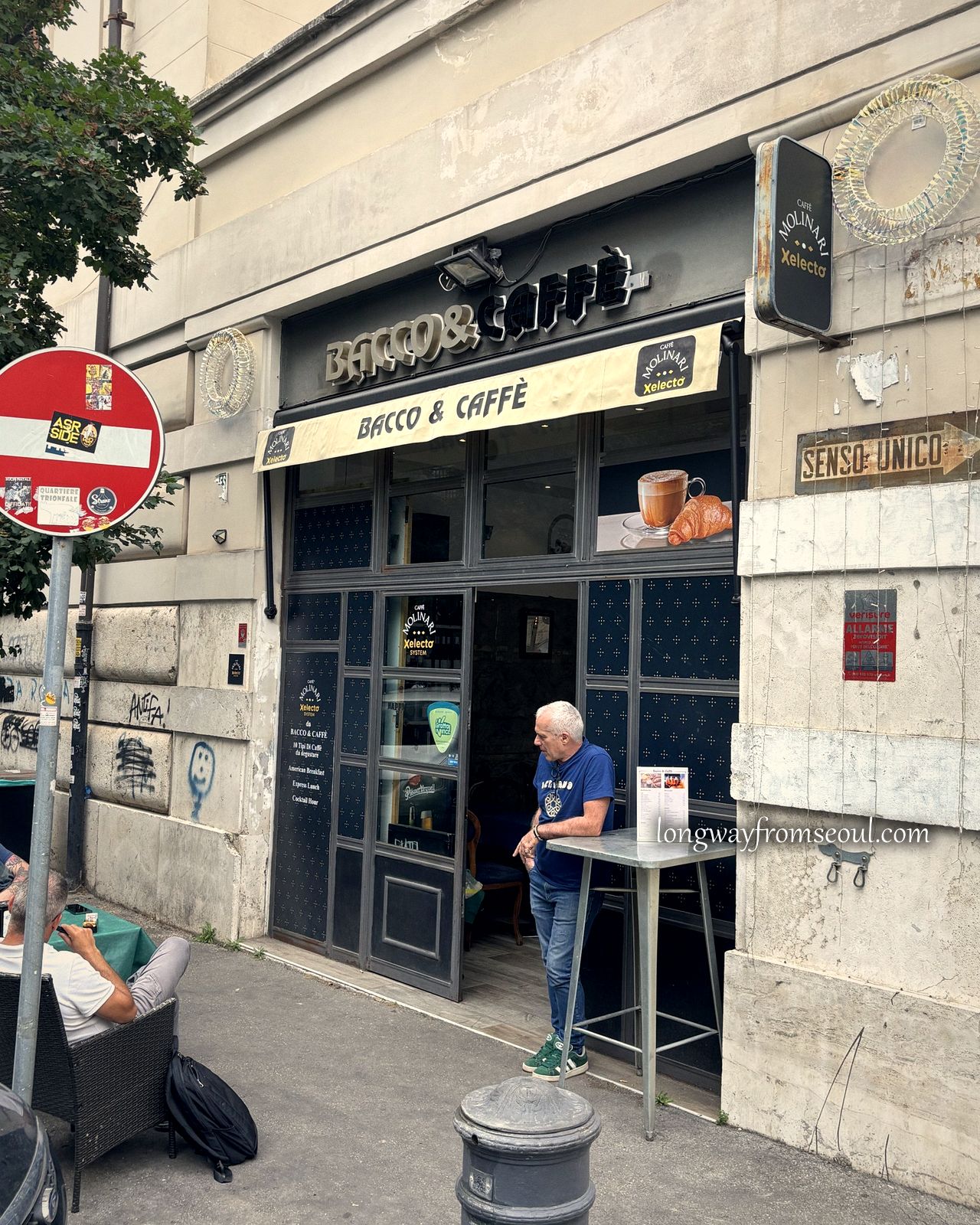
Trionfale on a Wednesday lunchtime. Men at the counter of the bar, standing up, because sitting down costs more and takes longer. The market under its awnings. Somebody’s scooter on the pavement where it should not be.
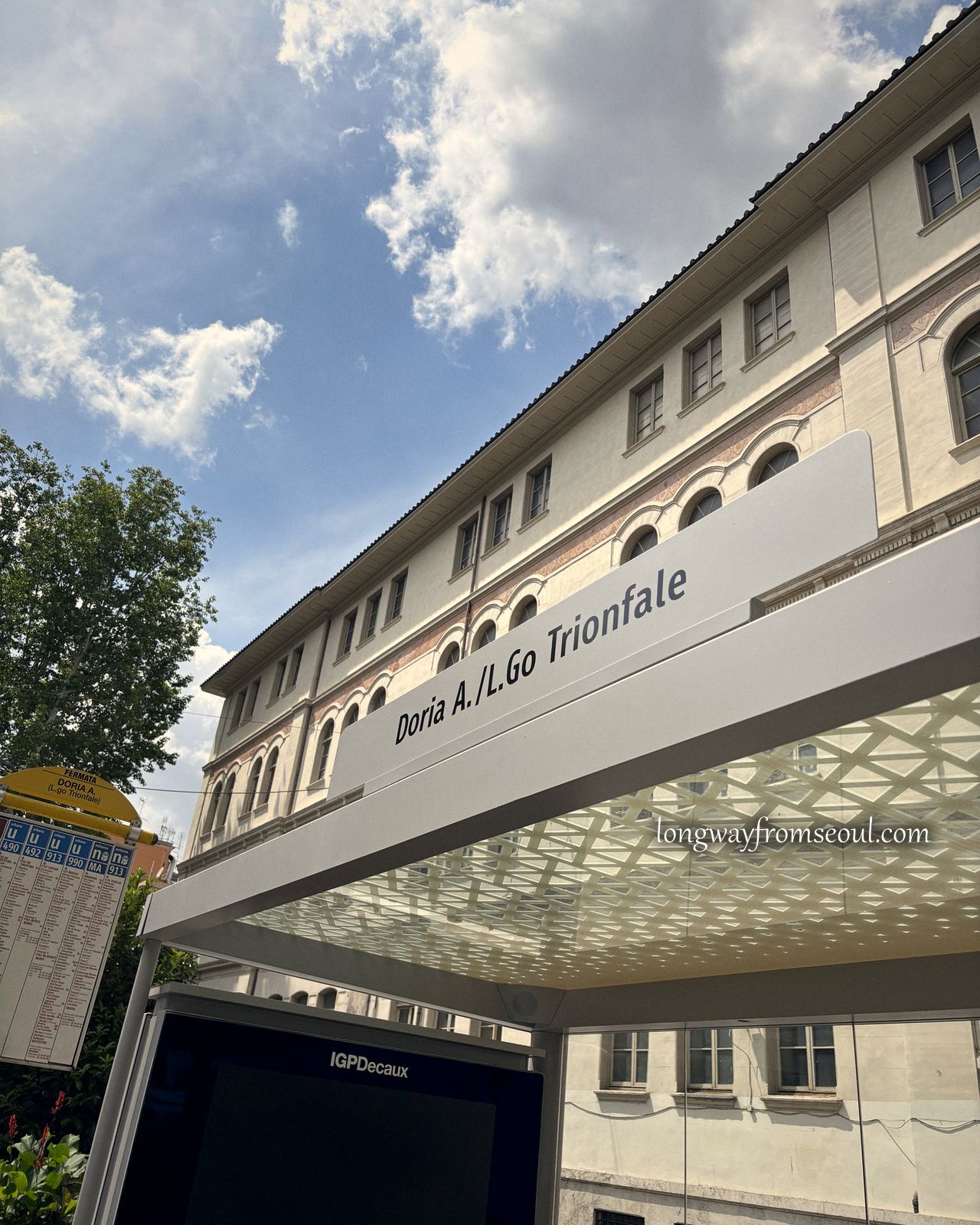
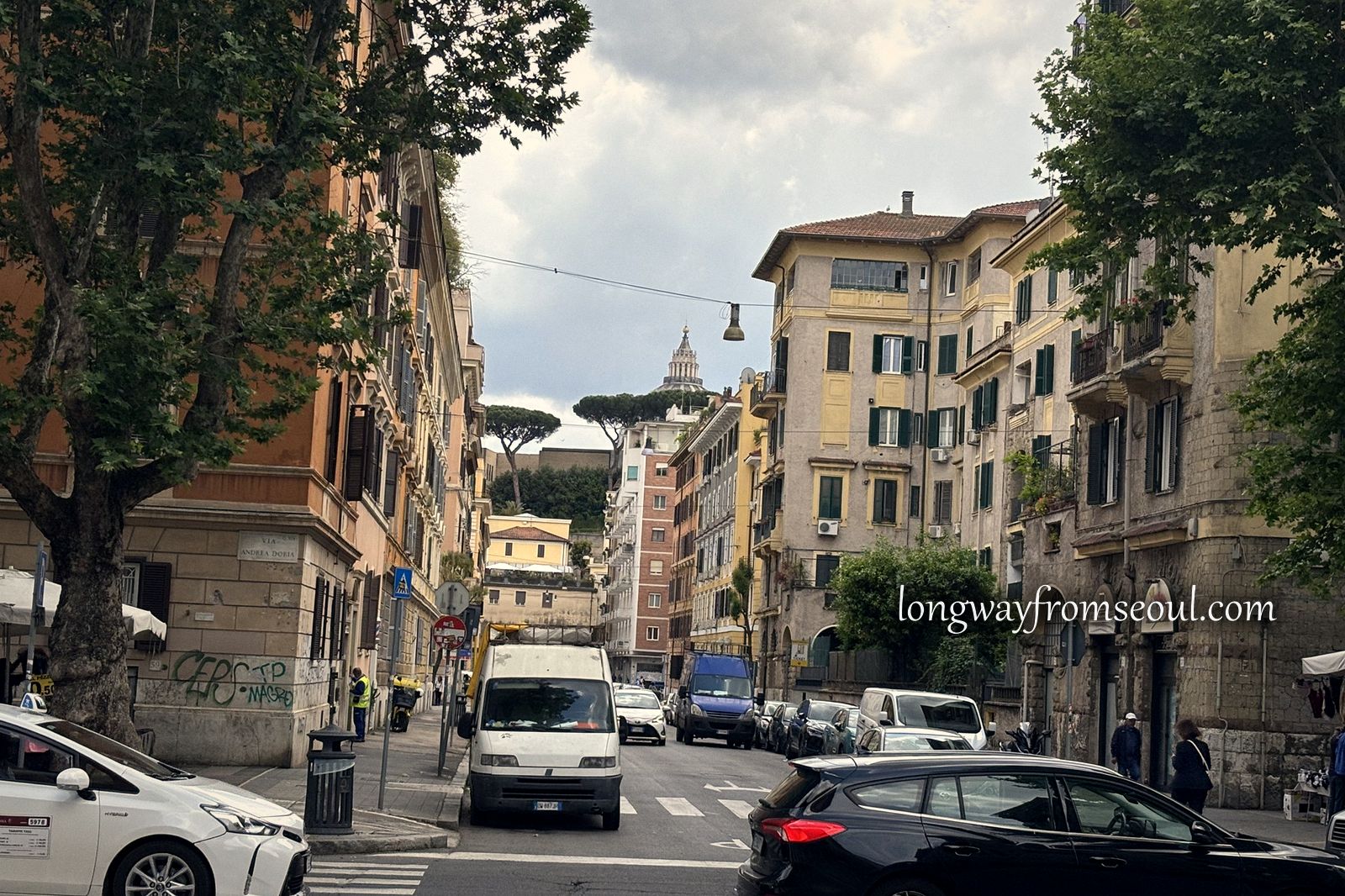
Rome carried on down the hill without us, which is exactly what you want a city to do. Nobody is showing you anything. You are just there.
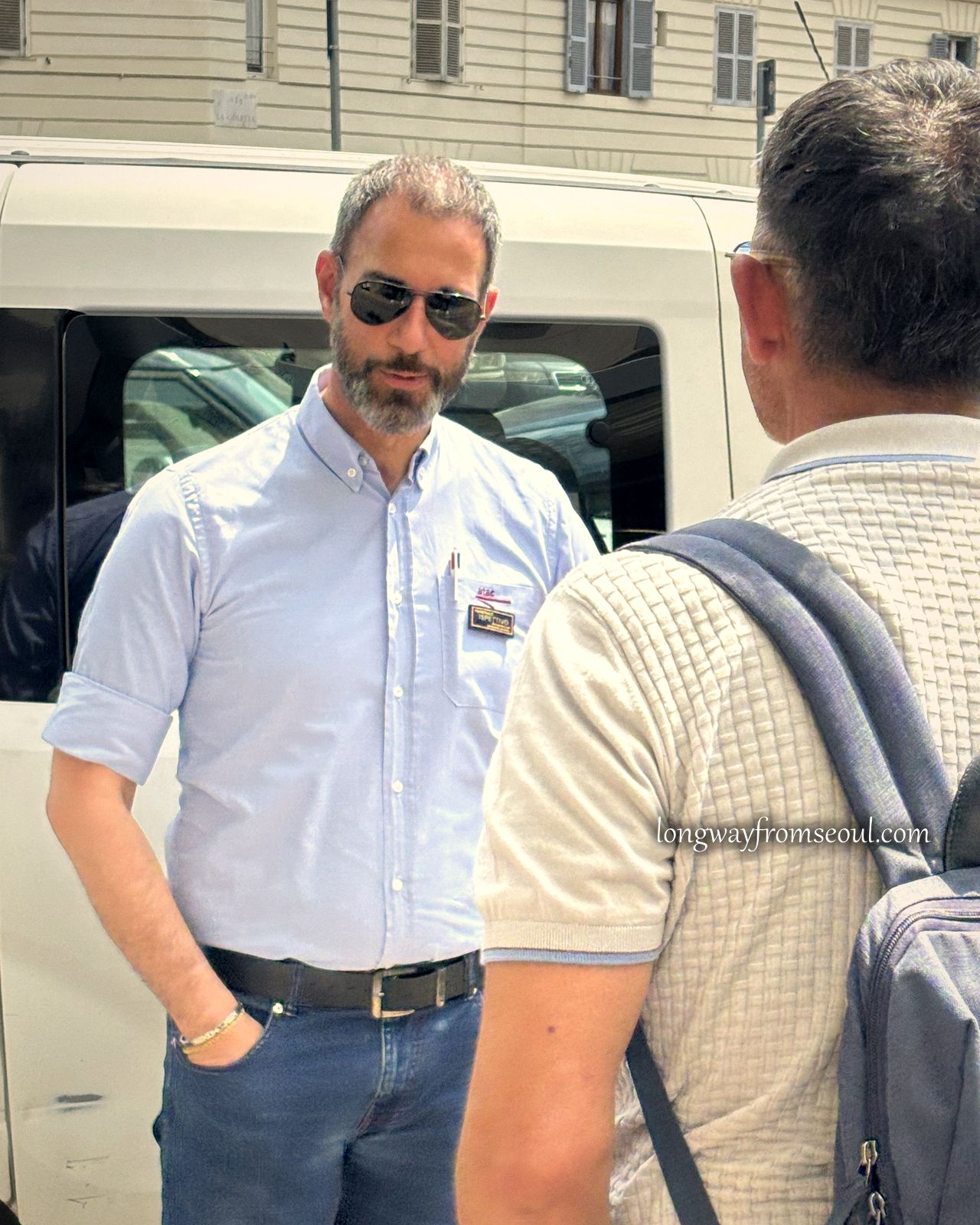
Then a white minibus pulled up and a man got out of it in a pressed blue shirt, sunglasses, two pens in his pocket and a little badge clipped to the front, and started telling a man with a backpack how this was going to go.
I like this photograph more than I can properly explain. Somewhere in every travel day there is a person like this — not anybody you will remember the name of, not anybody who is in your story — who decides for the next hour where you sit and when you leave. You hand yourself over to them and the day keeps moving.
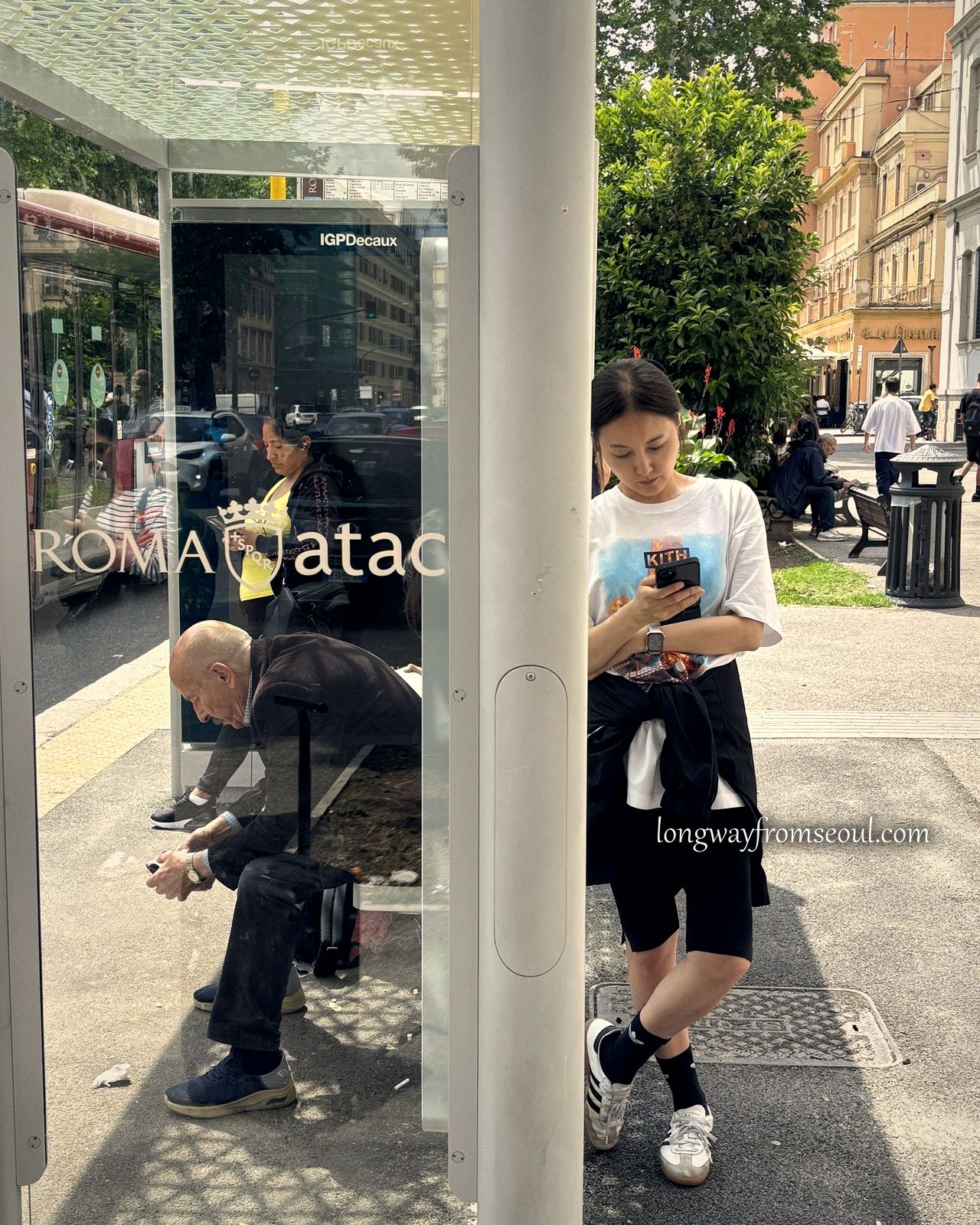
And then the bus stop, which is the picture I keep coming back to. My wife on one side of the glass, a man on the other side bent over his shoe, the whole street doubled in the reflection. Everybody waiting for something. Nobody looking at anybody. That is what a city does when you are leaving it: nothing, beautifully.
14:45 — back to Fiumicino, but not to fly
Three days earlier we had come out of that airport at 19:40 with the sun going down and taken a coach into the city. Now we did the same journey backwards, on the same kind of coach, holding a paper ticket with a QR code printed on it. Several companies run that route and they all leave from the same stops; the airport publishes the list of them.
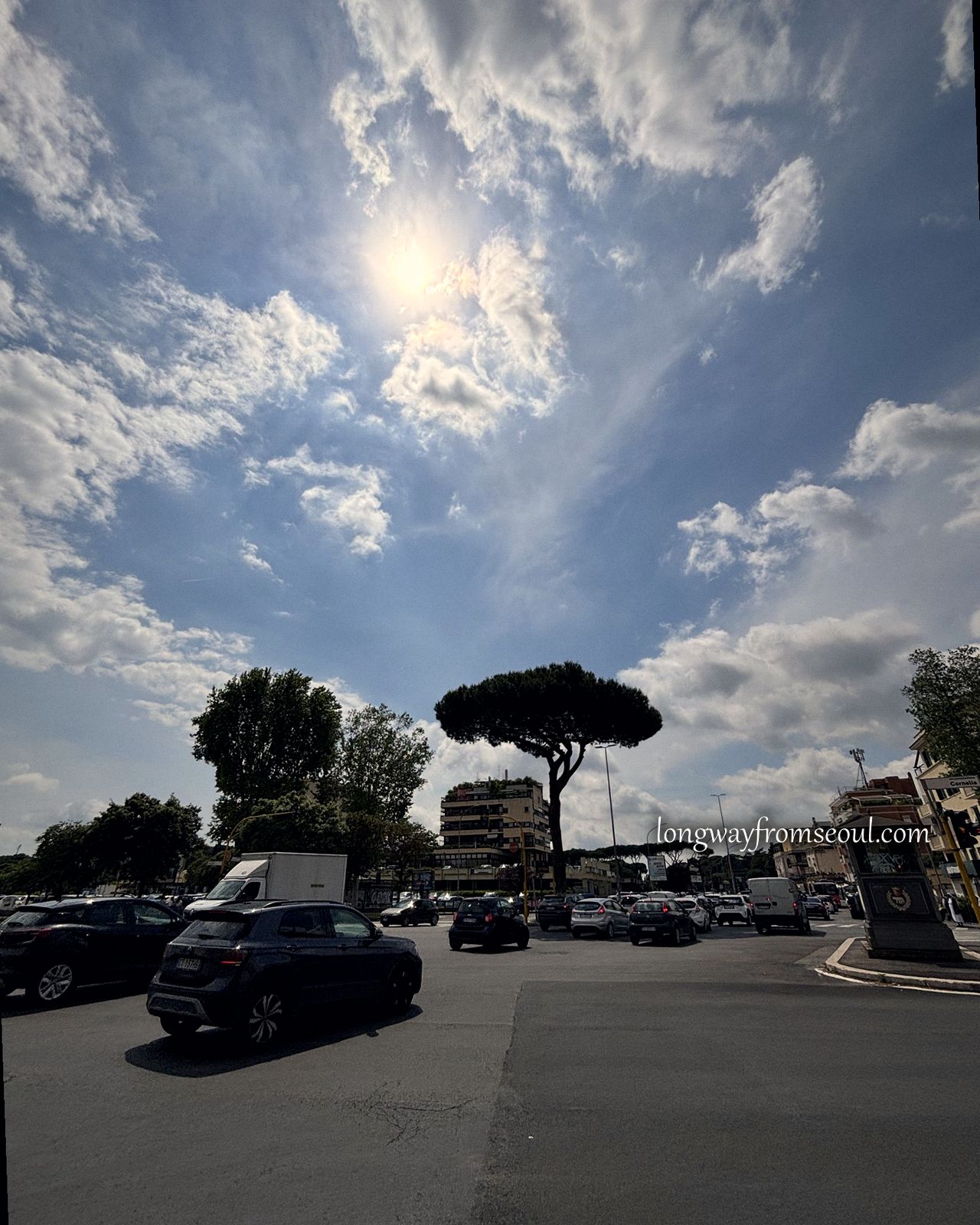
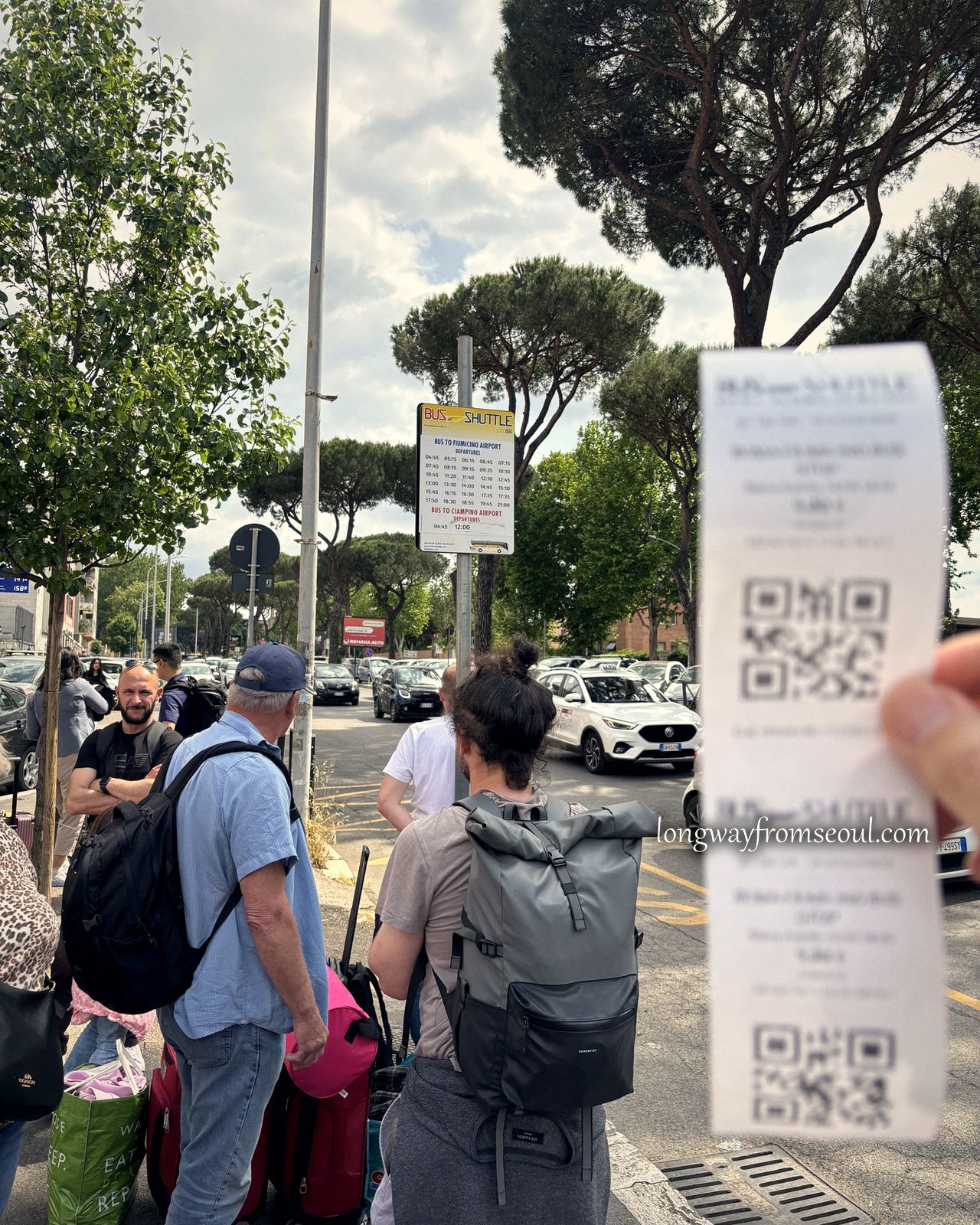
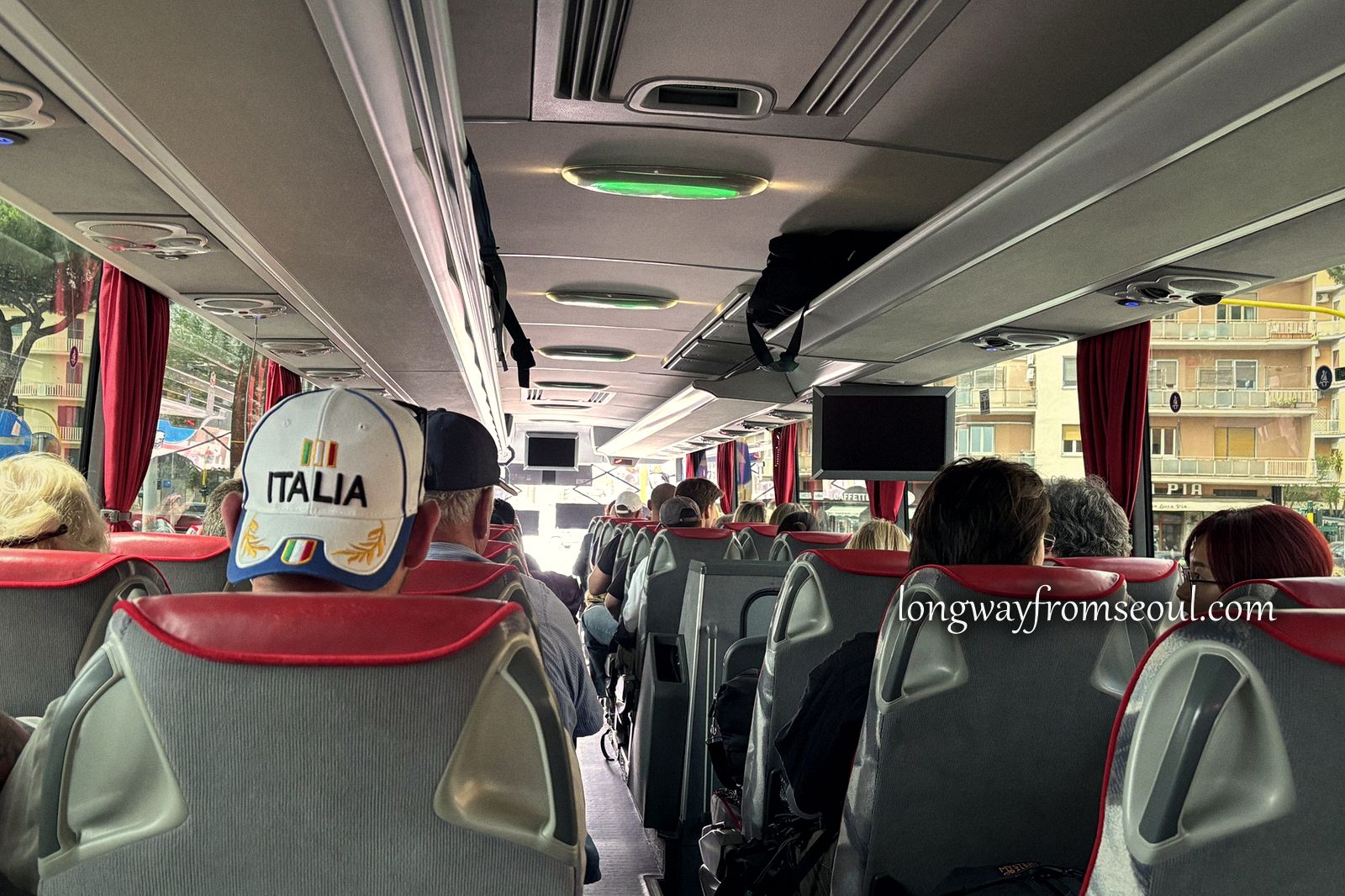
Everybody on that shuttle was going to the airport to leave. We were the only ones who were not.
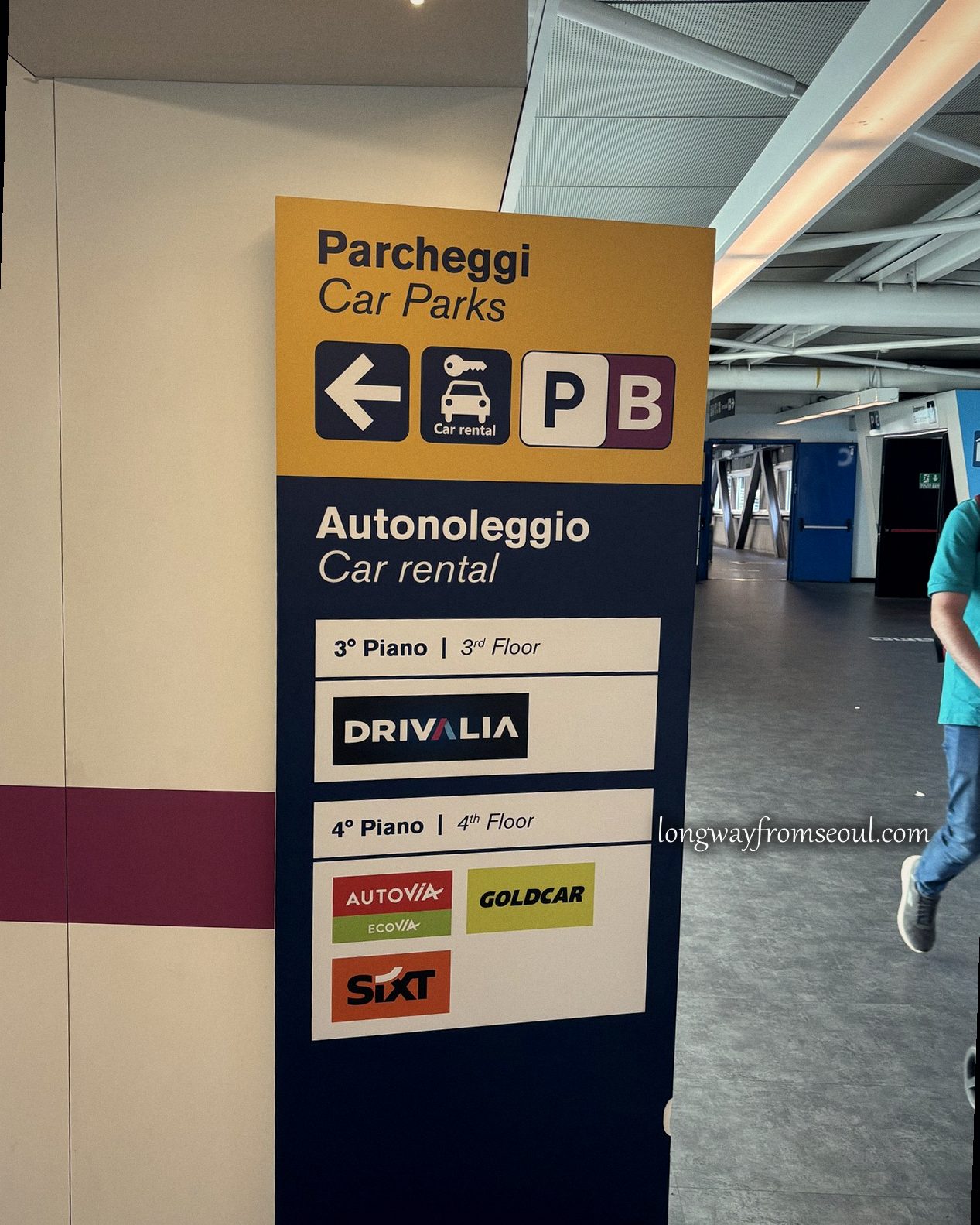
Third and fourth floor: Autonoleggio.
15:30 — the price at the counter was not the price on the website
And then the thing that happens to almost everybody, and that almost nobody tells you about beforehand.
The number on my booking and the number at the desk were not the same number.
Not a rounding difference. A different figure, arrived at through insurance I had believed was already handled, explained politely and quickly by somebody who has this conversation forty times a day and can see exactly how tired you are.
I felt the argument assembling itself in my chest. I had the booking open on my phone. I was right.
My wife said: let us not do this. Not here. Let us just go.
She was right and I knew it inside two seconds. We had a coast to get to. We had been happy for three days straight. There is a kind of victory that costs more than it returns, and standing at a rental desk at Fiumicino winning an argument about a hundred euros, while the good mood of an entire country drains out of the afternoon, is exactly that kind of victory.
So I said okay. I paid the different number.
And then I did the one thing that was actually worth doing.
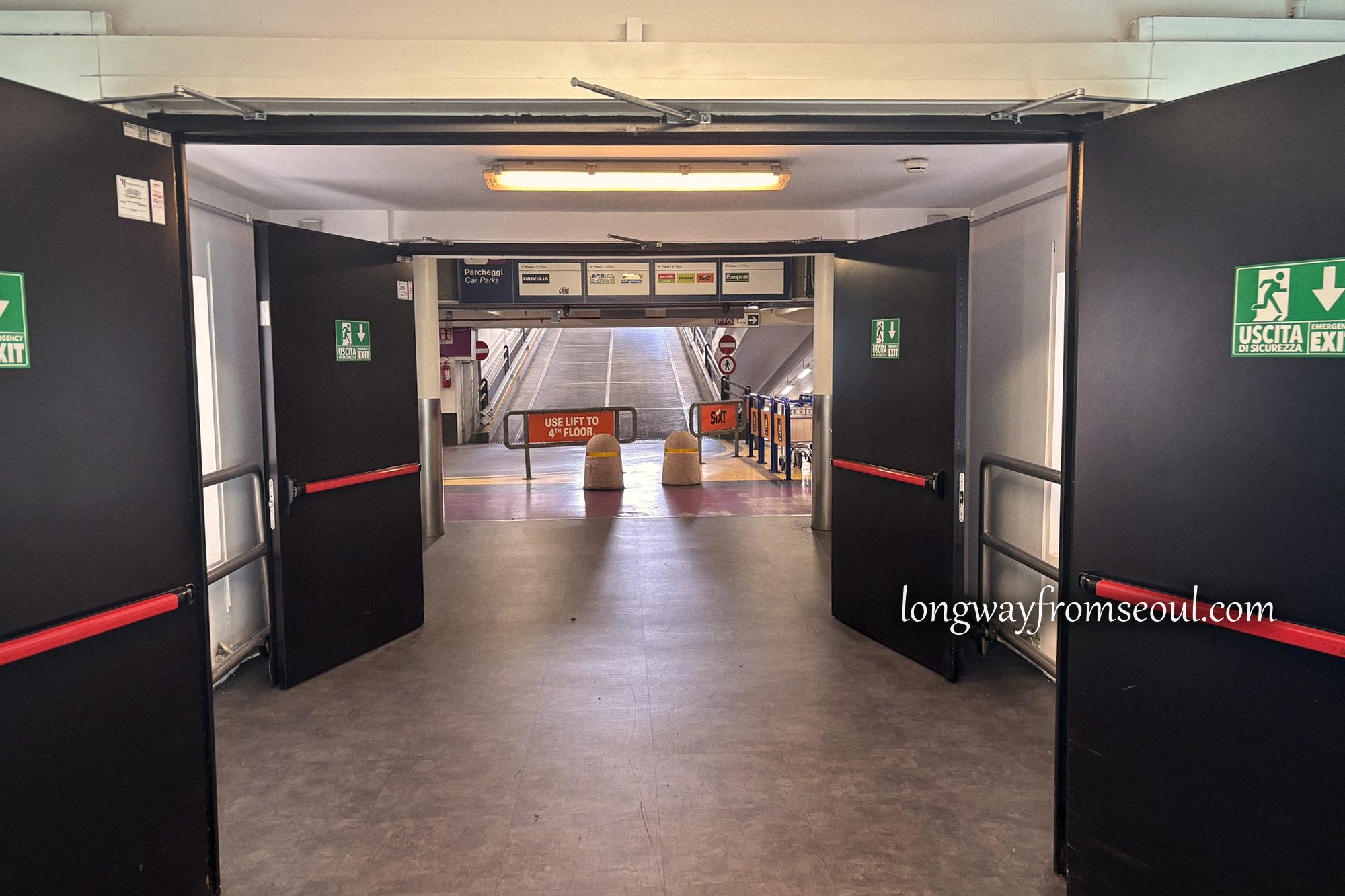
17:35 — thirty-one photographs before I turned the key
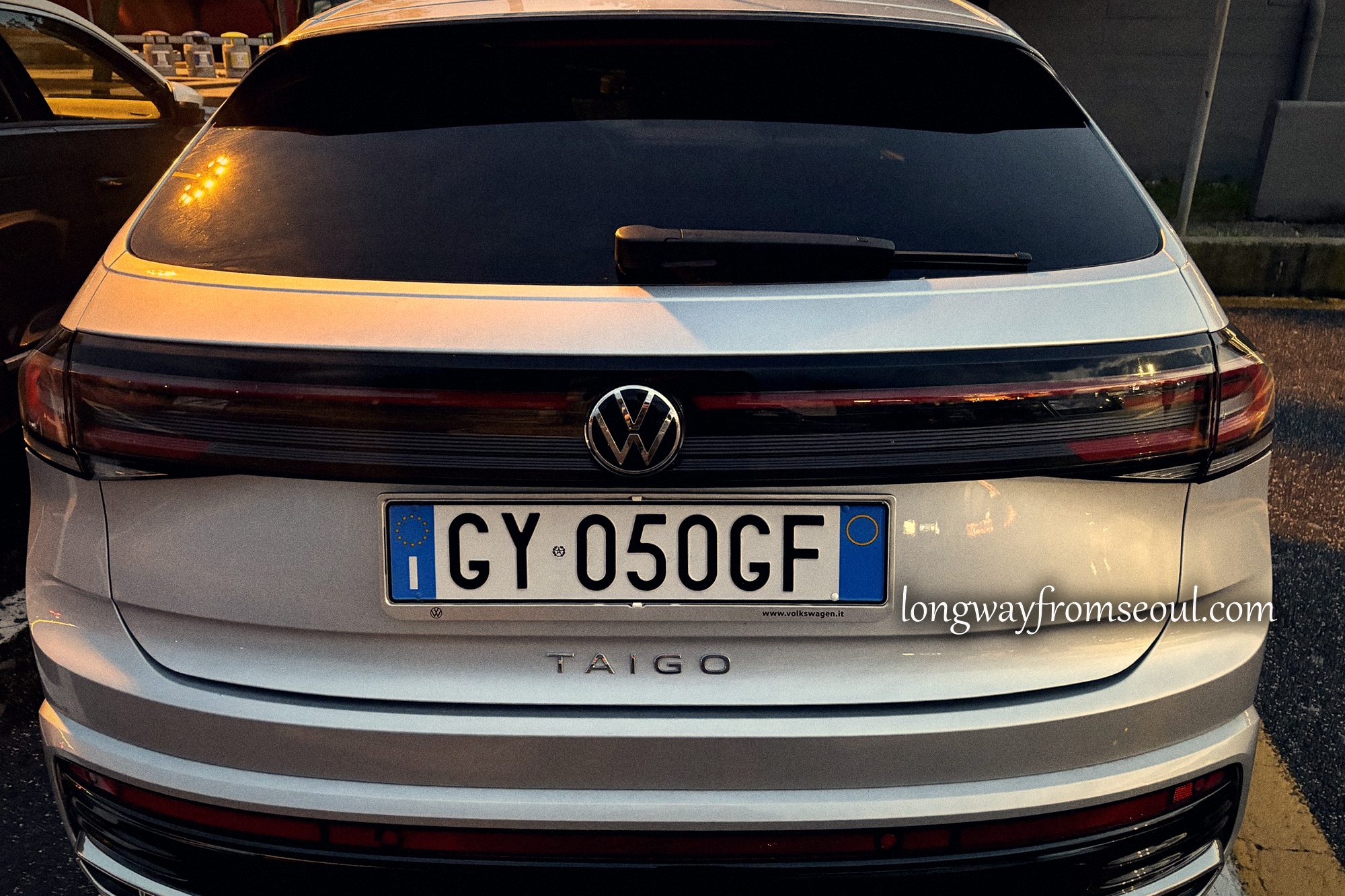
A silver Volkswagen Taigo, in a concrete bay on the fourth floor. Before I put a single bag in it I walked around it and photographed every panel.
Both bumpers. All four wheels and all four arches. Both mirrors, close. Every door, straight on and raked. The roof. The windscreen. The plate. The interior. Then the dashboard, because the clock said 17:35 and the odometer said a number, and I wanted both of those in a file with a timestamp on it.
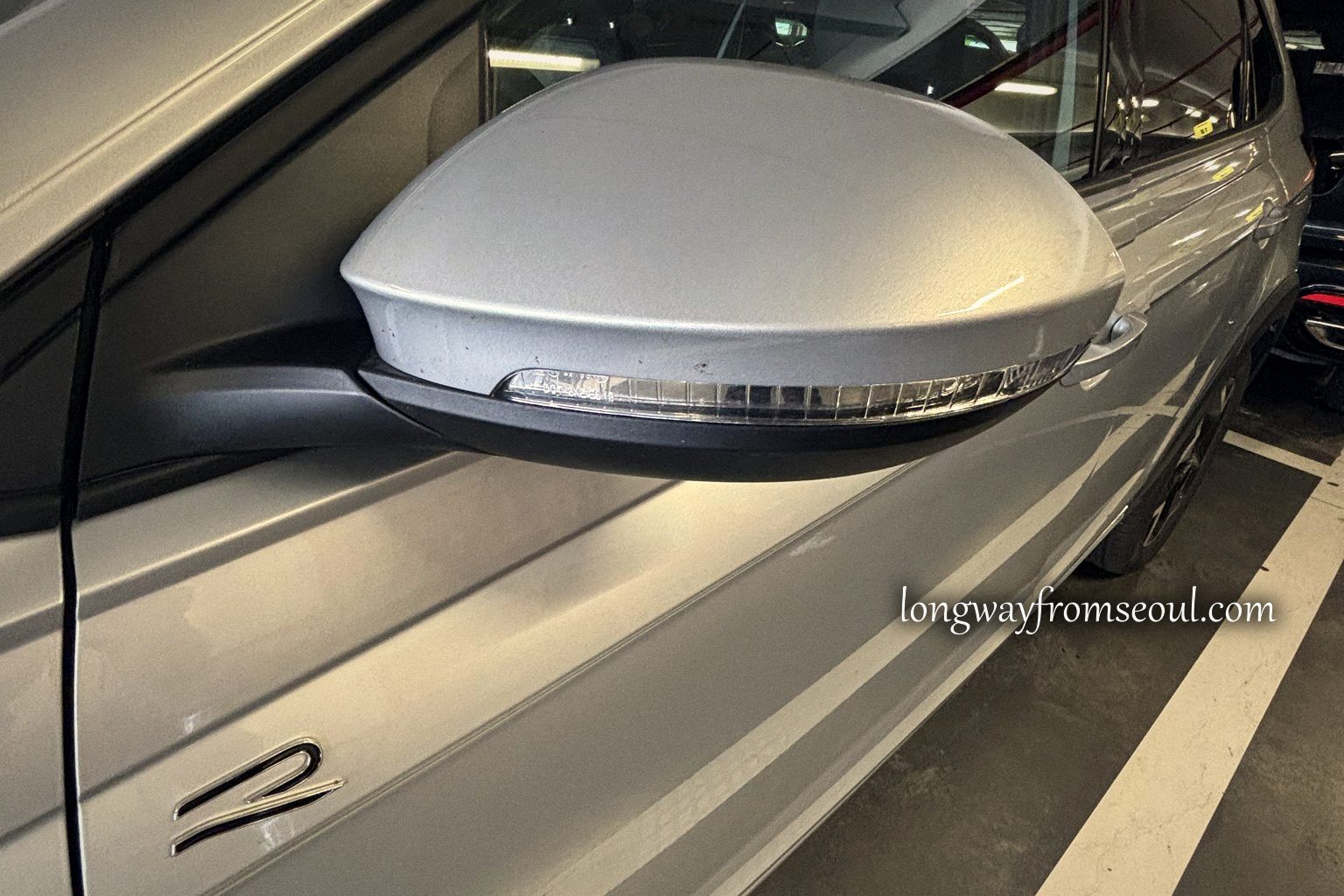
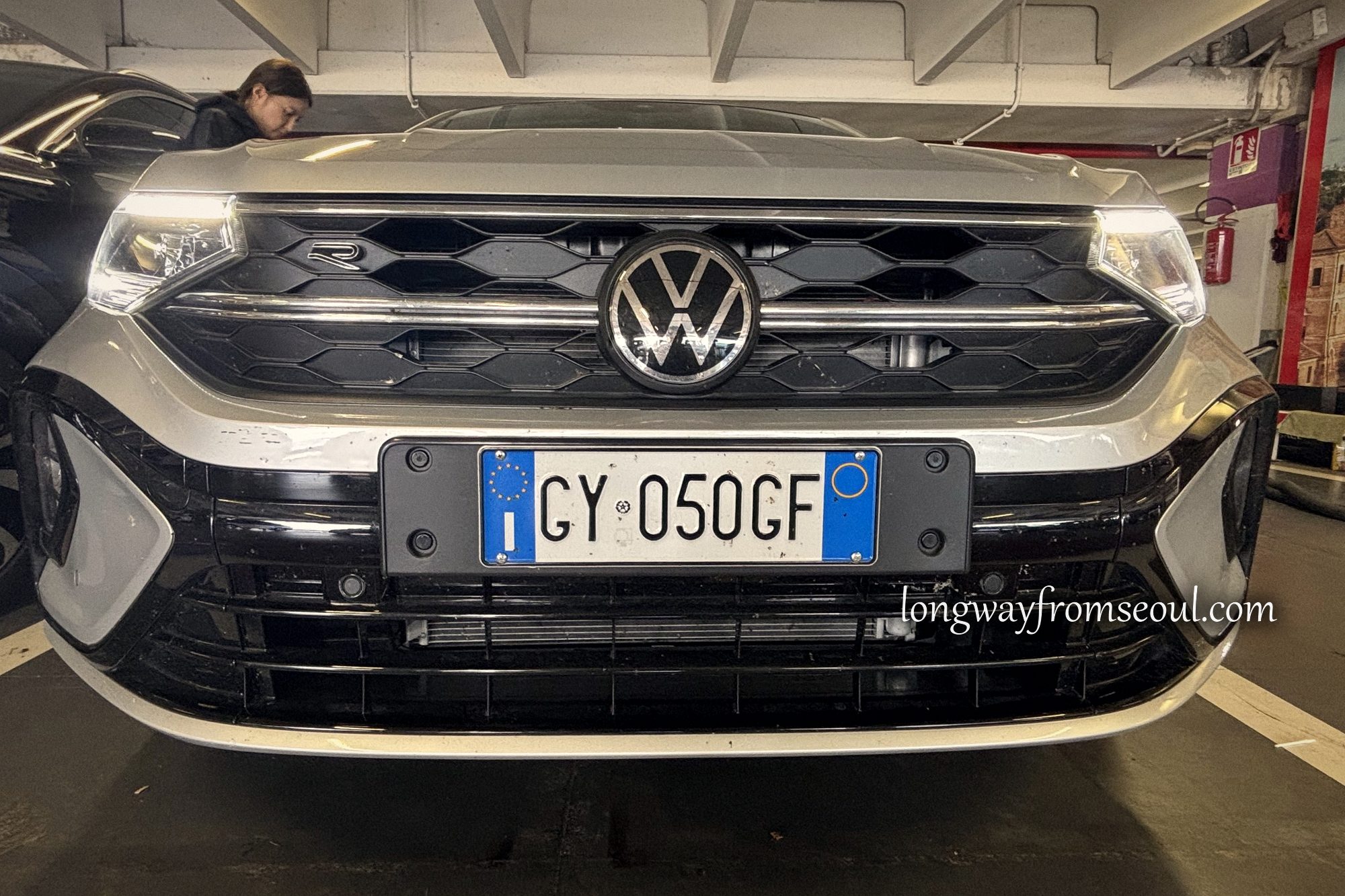
It took about eighteen minutes. A man two bays over watched me do it with the expression of somebody deciding whether I was careful or unwell.
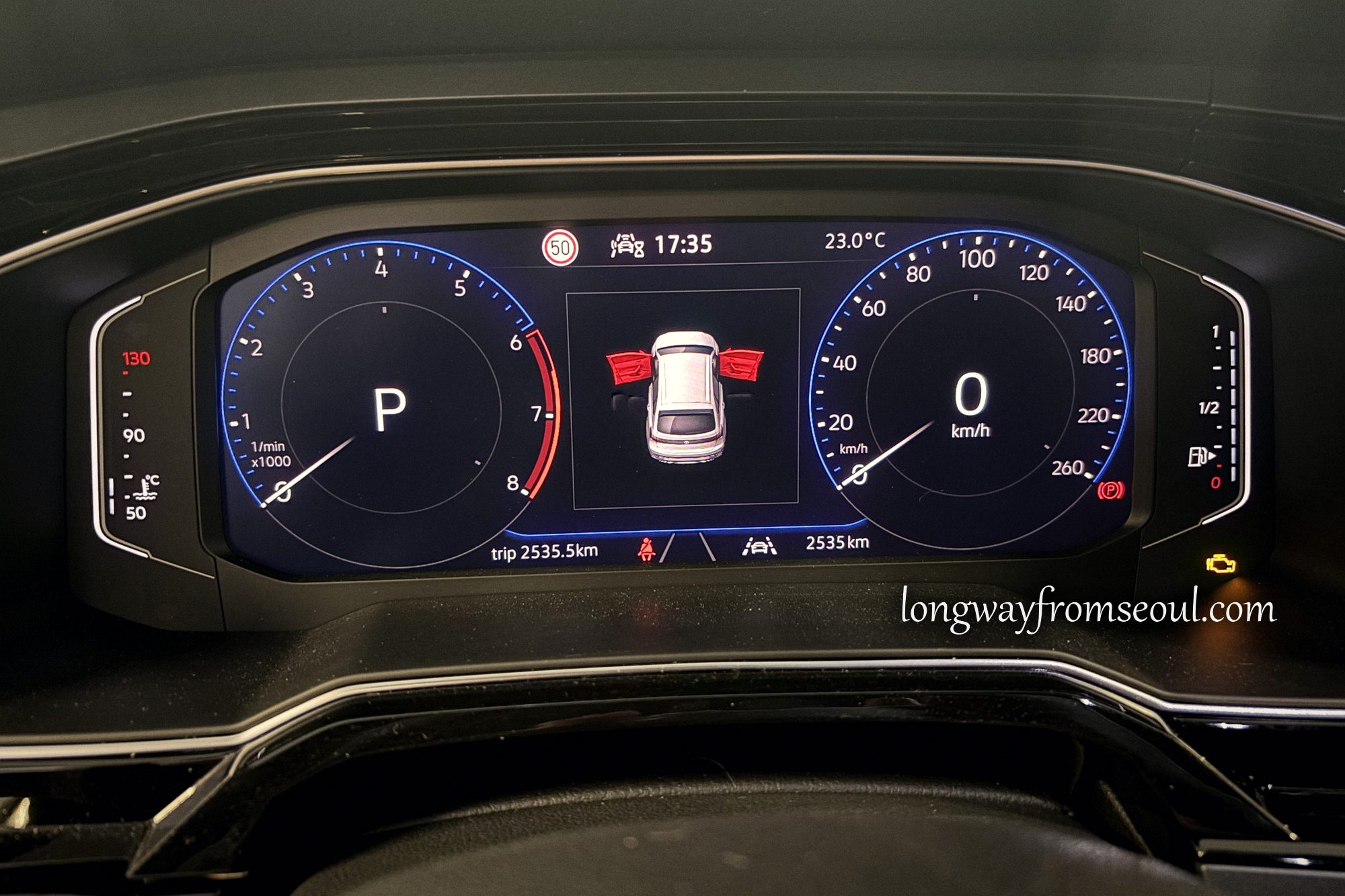
I had already decided to lose the argument about money. I was not also going to lose an argument three weeks later, in another country, about a scratch that was there before I arrived.
19:00 — the first Italian road
Out of the airport, onto the local roads, and then the autostrada.
I have been to Italy before, for work, on other people’s schedules. I have driven these roads. But a road you drive for a job and the same road with your wife in the passenger seat are not the same road, and I have no good explanation for why that is true.
The first toll gate came up and I did the small pantomime everybody does the first time — wrong lane, right lane, ticket, window up, fine. Then the country opened out and we were two people in a silver car going south, and that was the whole of it.
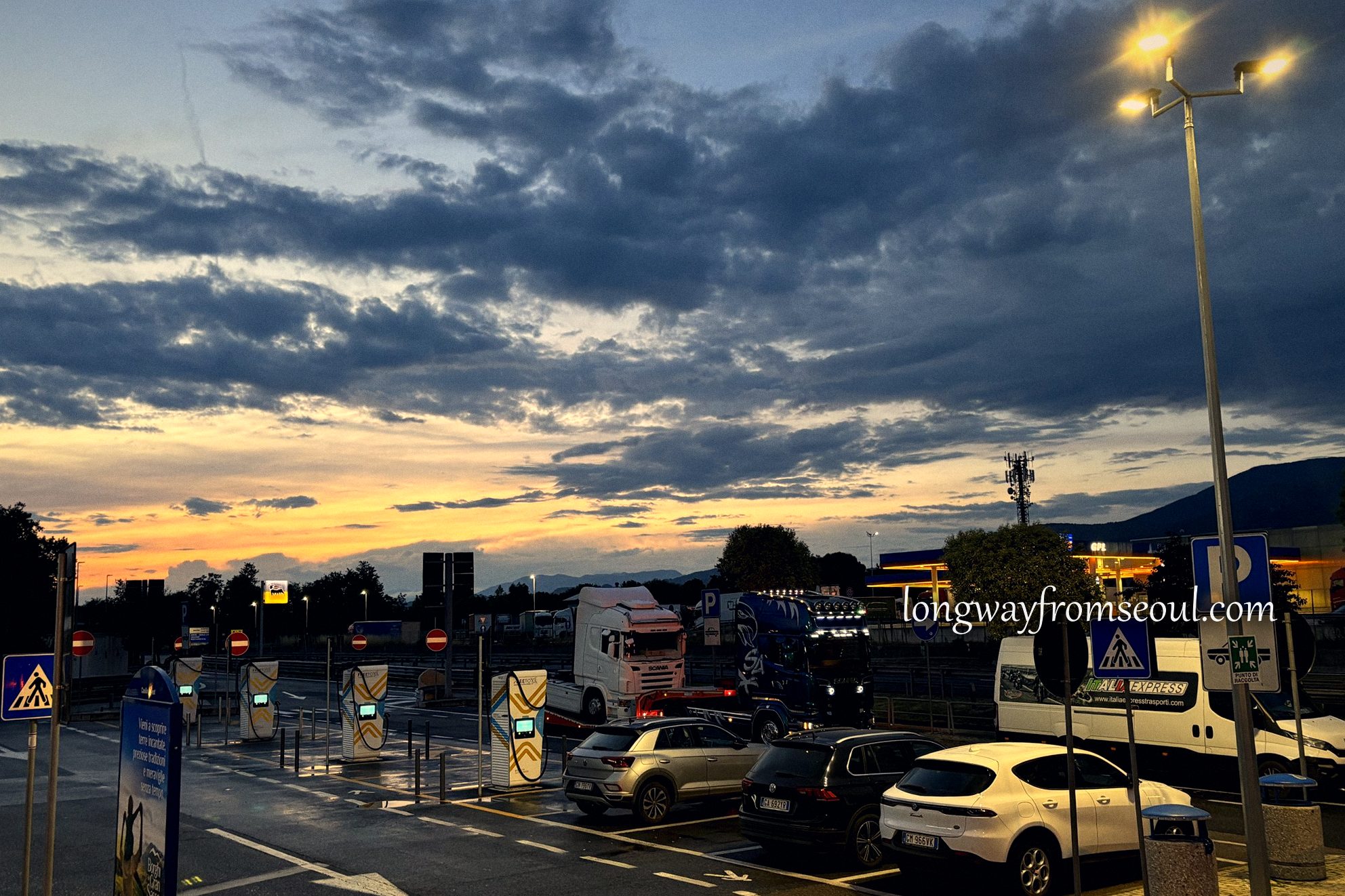
20:11 — an Autogrill, at sunset, which I was not prepared for
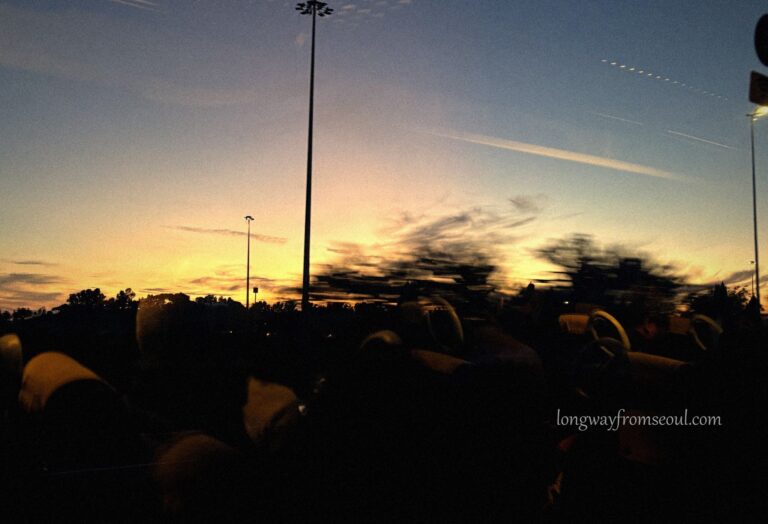
We stopped at a service station somewhere past Frosinone, and the sky did the thing it had been threatening to do since we left Rome.
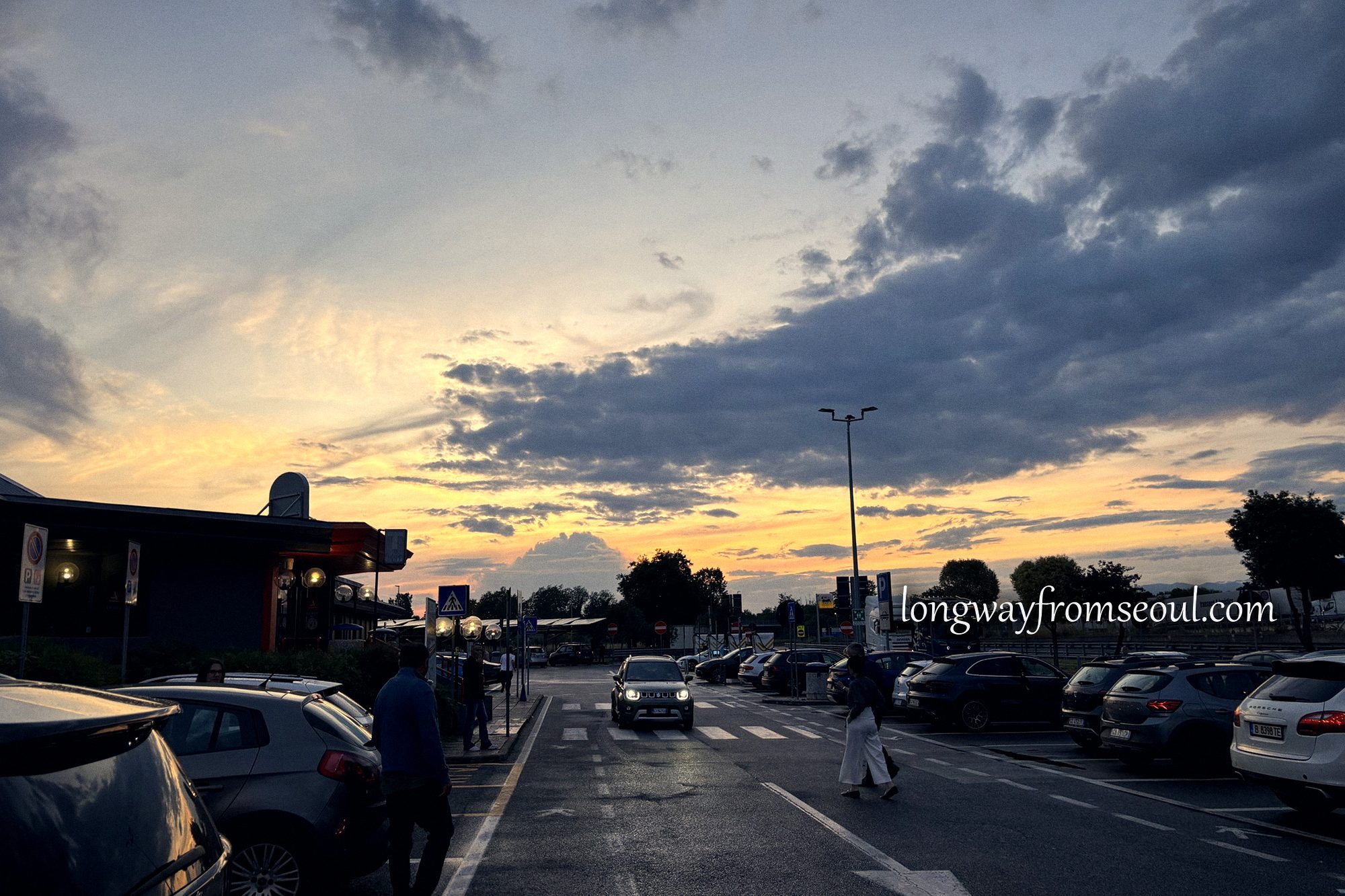
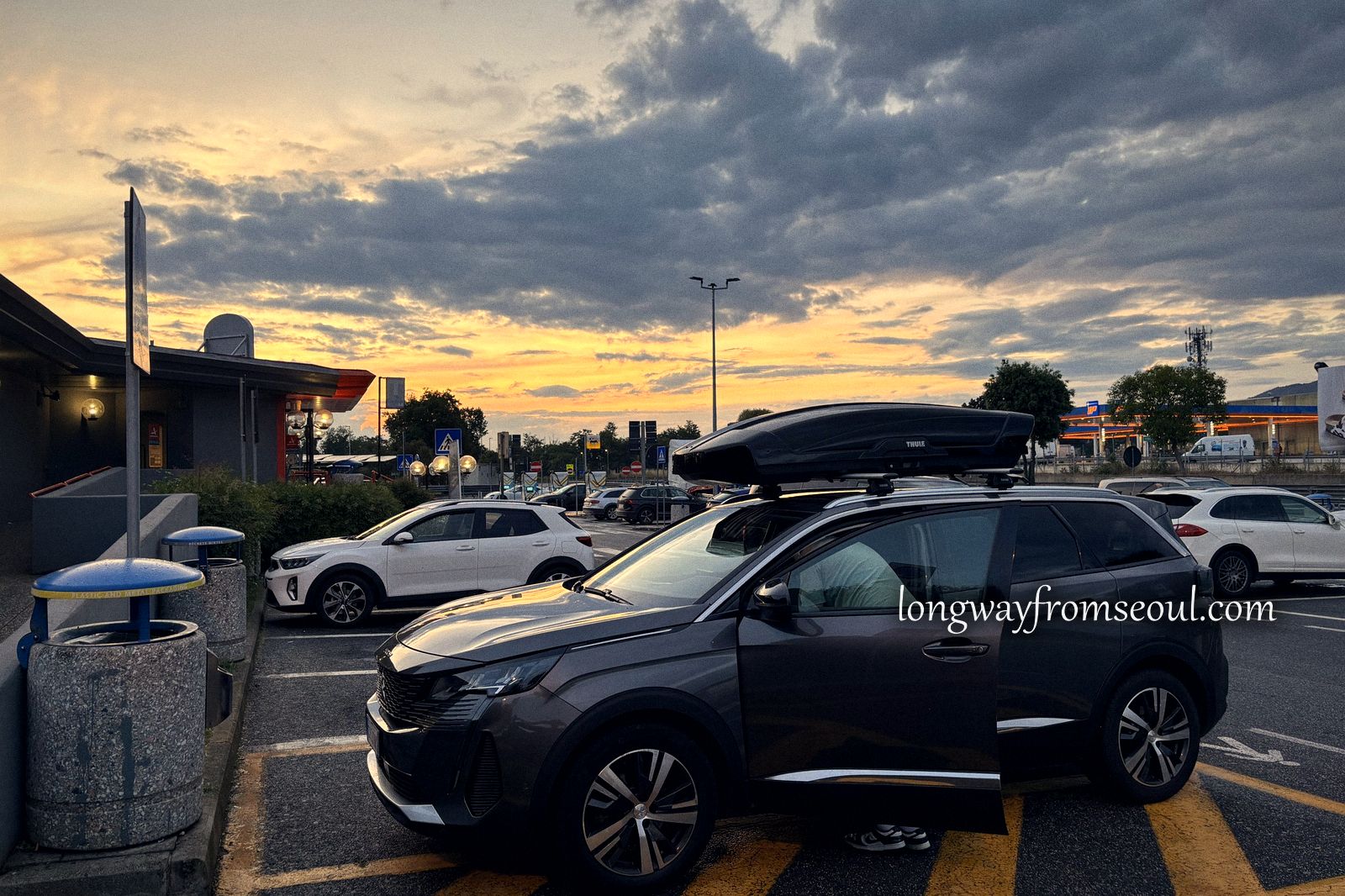
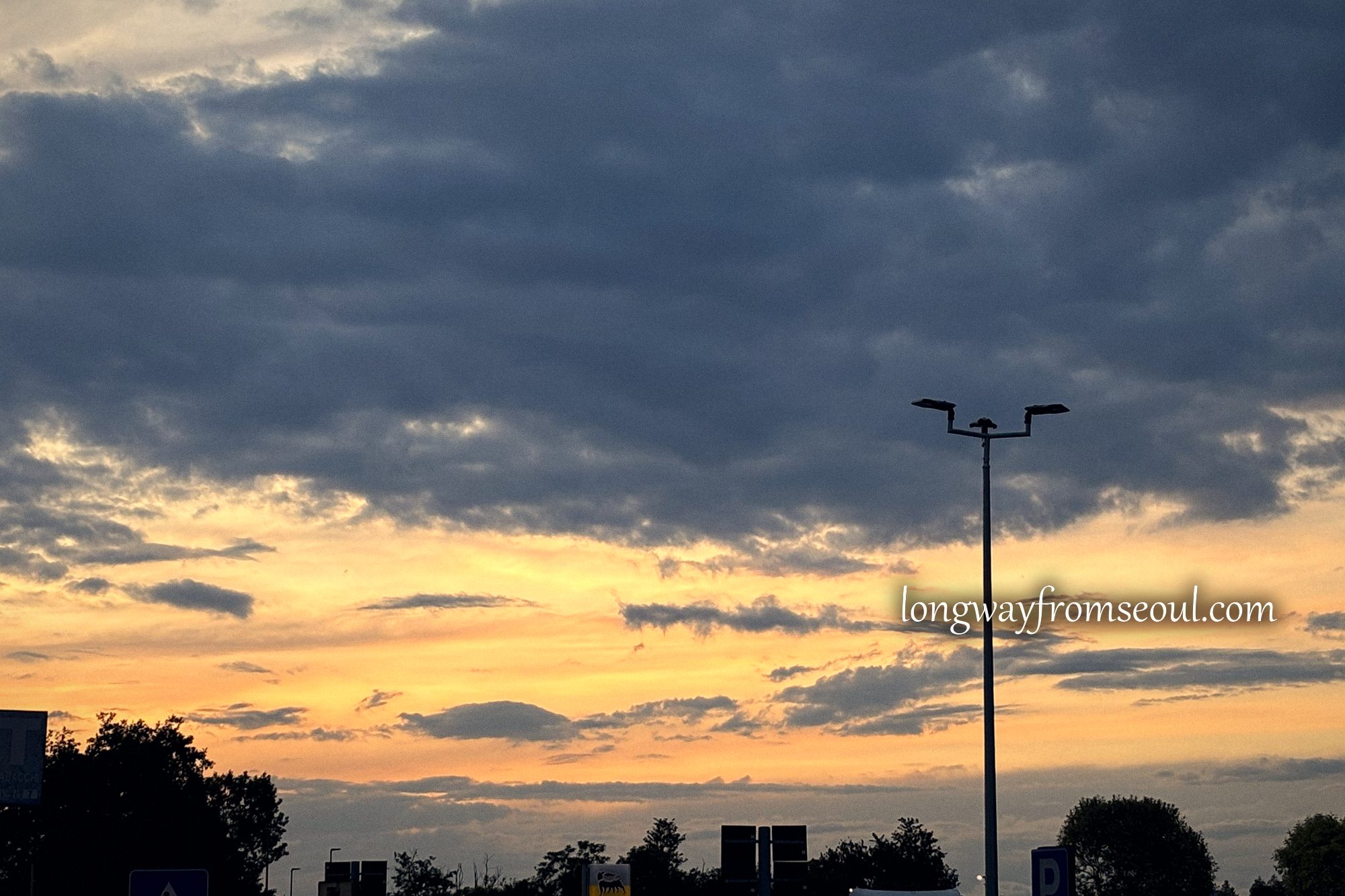
Inside there was a proper coffee counter with a proper machine and a man in an apron making espresso at nine in the evening like it mattered. A wall of chilled drinks. Chocolate stacked into architecture. People having actual dinner.
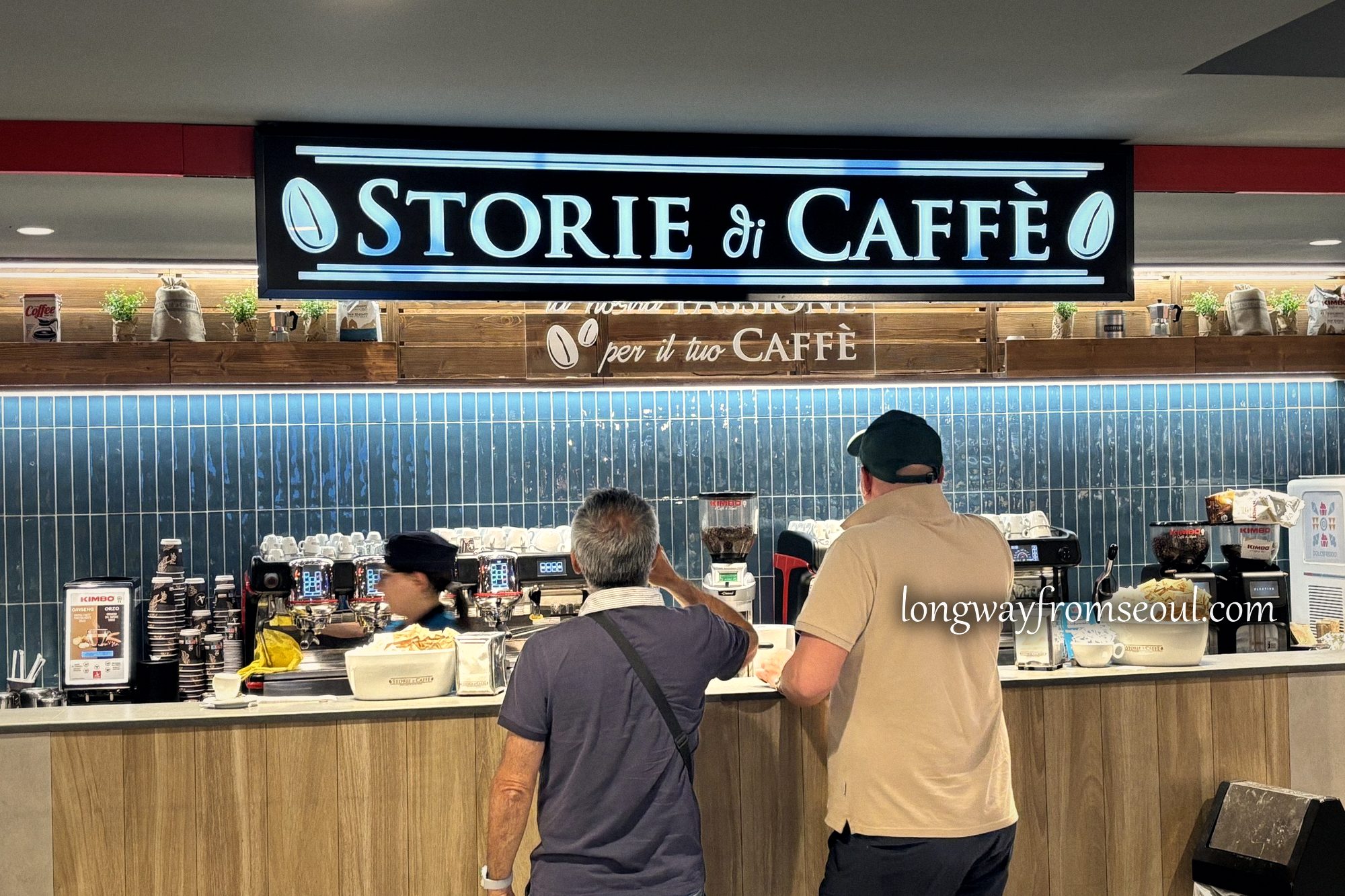
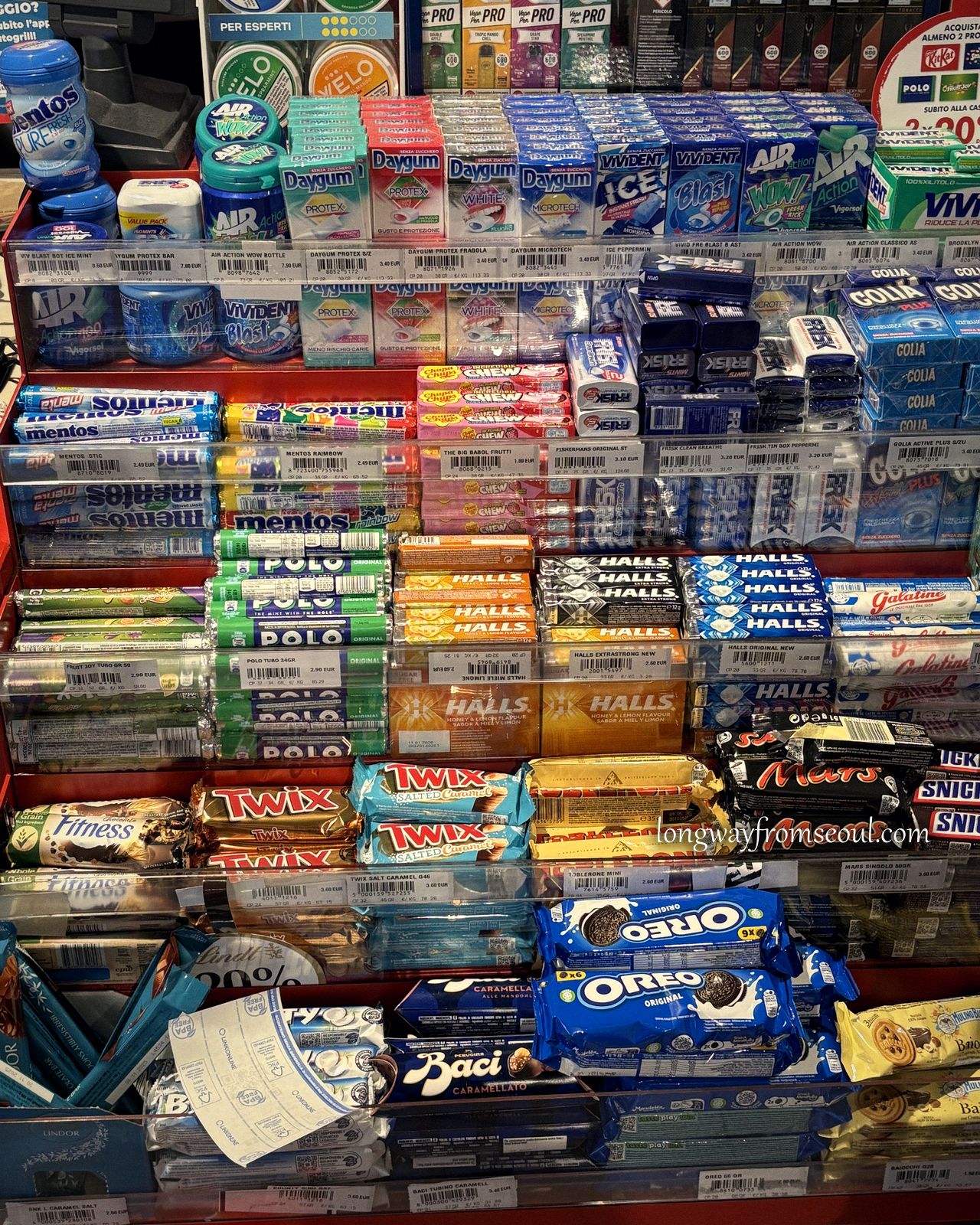
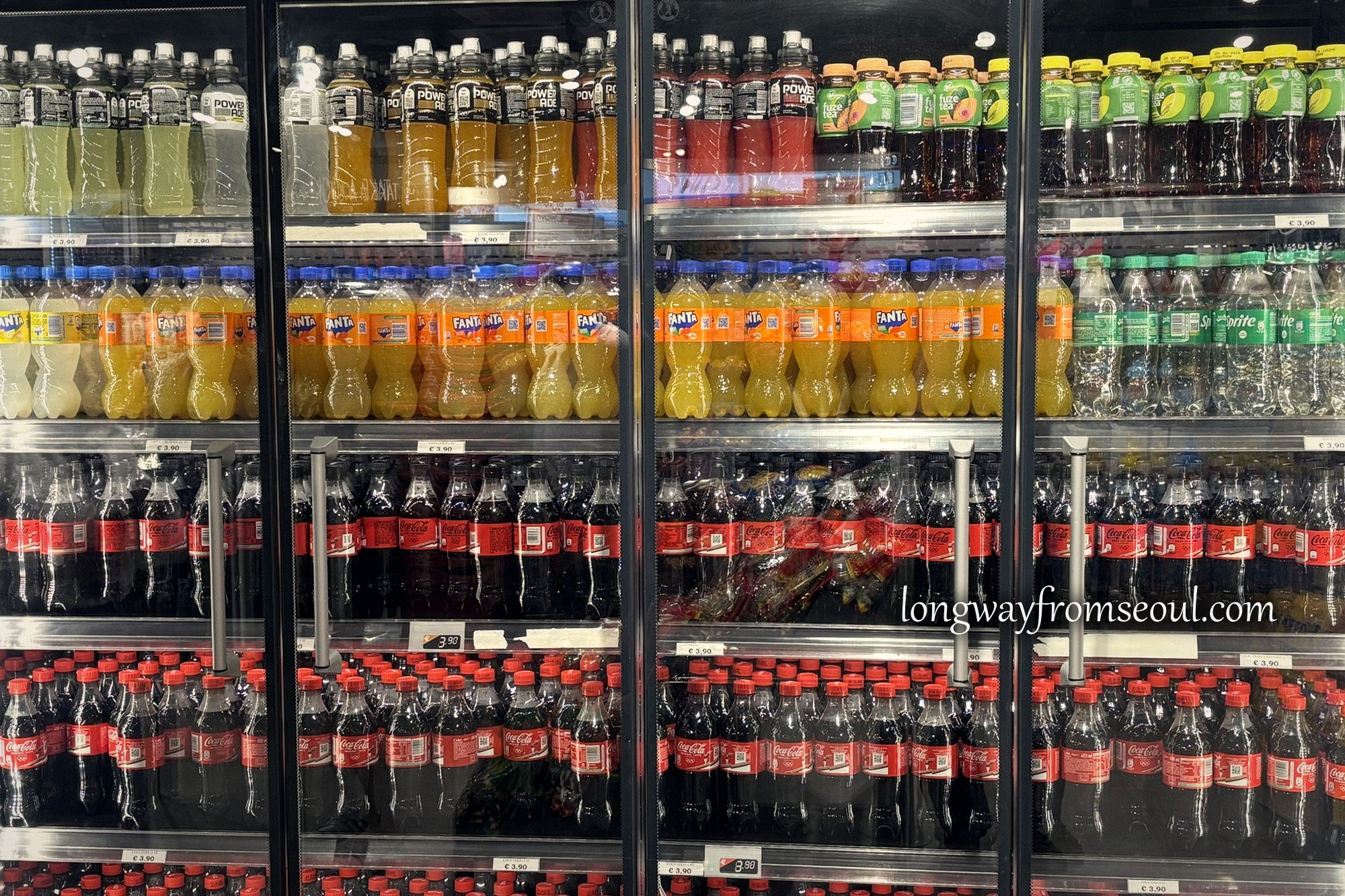
I know what a Korean motorway rest stop is. I have eaten a lot of food standing up at one. This was not that. It was not better in some league-table way — it was simply a different idea about what a stop on a motorway is for.
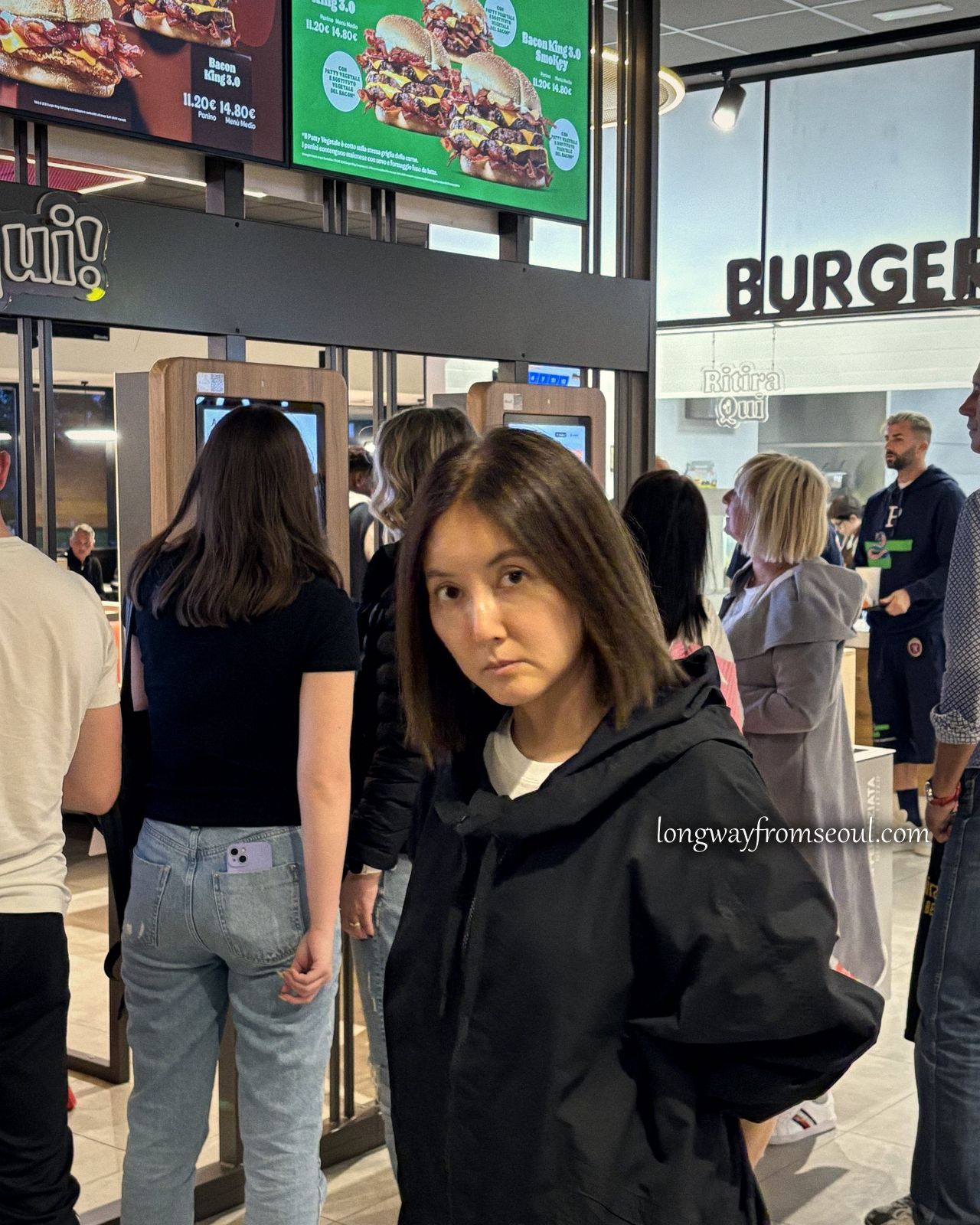
And here is the part I keep thinking about. I had stood in Italian service stations before. Nothing in this building was new to me. But everything about it was new, because I was there with her, and she was seeing it for the first time, and that turns out to be a way of seeing it for the first time yourself.
22:00 — past Naples, and done
We went past Naples somewhere around ten at night, the city a long orange smear off to the right, and kept going. The last stretch down towards the coast was dark and narrow and I was concentrating too hard to look at anything.
We got to the room too tired to do anything but put the bags down. Outside, in the dark, there was the sound of water a long way below us, and nothing at all to see.
The Amalfi coast was there the whole time. We just could not see it yet.
Renting a car in Italy: what actually happens at the counter
I am not writing this as a complaint. I am writing it because it is the most common surprise in Italian travel, and because the defence is simple and takes ten minutes.
1. The quote online is not the bill at the desk
The gap is almost always insurance. A booking site sells you cover; the rental company at the counter is a different business, does not necessarily recognise it, and will offer you theirs instead. Reports from Rome and Fiumicino describe counter charges running from a few hundred euros up to four figures on top of the online price.
Excess cover bought before you travel typically runs about €15–25 a day. The equivalent zero-excess product bought at the desk is commonly €35–55 a day. Same risk, different moment, roughly double the money.
2. Bring a real credit card, in the driver’s name
Italian rental companies block a deposit on the card at pickup — commonly €300 to €1,500, and up to €2,000–2,500 with budget operators — and release it days or weeks after you return the car. Most still require a physical credit card in the main driver’s name. Debit cards are often refused outright, or accepted only if you buy the most expensive insurance package, which is how a debit card quietly becomes the most expensive card you own.
3. Photograph the car before you move it. All of it.
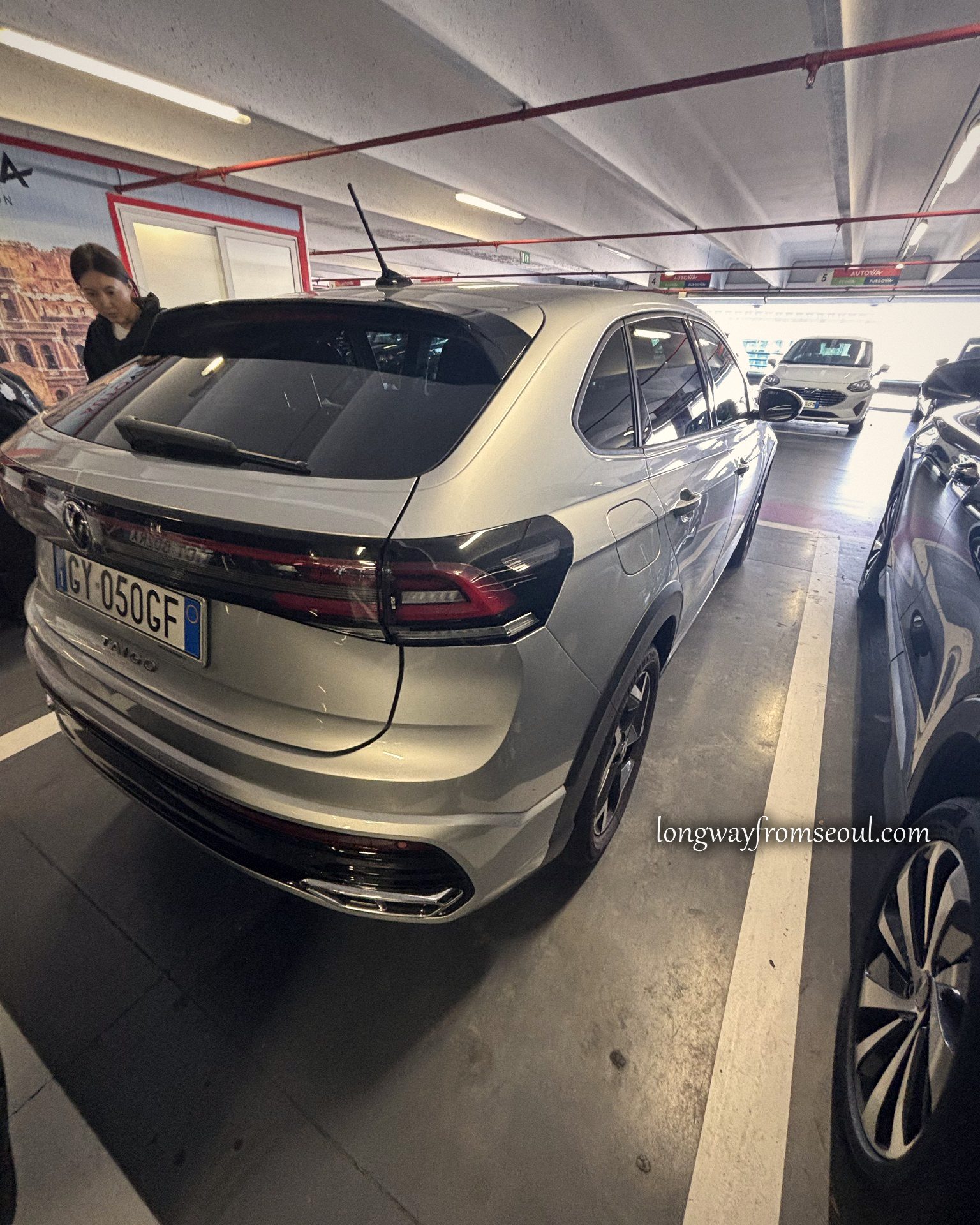
This is the one piece of advice every guide agrees on, and the one most people skip, because they are tired and the car looks fine.
- Every panel, every wheel, both bumpers, both mirrors — and the roof, which people forget and which gets charged for.
- The windscreen, close enough to show chips that are already there.
- The interior, including the seats and the boot floor.
- The dashboard — clock, odometer, fuel level — so the starting numbers are not a matter of opinion.
- Do the same thing again when you hand it back, in the same order.
Your phone date-stamps all of it automatically. That is the entire system. Be honest about what photographs can do, though: they are evidence, not a force field. Travellers with clear before-photos still get charged and still have to dispute it — but disputing with thirty-one timestamped images is a completely different conversation from disputing with a memory.
4. The fine you will not see for months: ZTL
Italian towns have zone a traffico limitato — restricted zones, marked by a white circle with a red border, enforced by camera. Drive into one without a permit and nothing happens at the time. The fine reaches you months later, through the rental company, with an administration fee attached.
Historic centres are the entire risk. If your accommodation is inside one, ask the property for the exact approach and whether they can register your plate — most that sit inside a ZTL can. Rome publishes its own zones and their hours, and every other city does the same.
5. The autostrada, and the Autogrill
You take a ticket on entry and pay on exit — cash, card, or the Telepass lane, which you should not use unless you have the device. Stay out of the lanes marked with a yellow T. The motorway operator sets out how the toll is worked out and what it will take, if you want the official version.
And stop at the service stations. Not as a chore — as part of the trip. The coffee is real coffee, the food is real food, and at the right hour the car park faces west.
What the day actually taught me
Two things, and they contradict each other, which is why I think they are both true.
The first is my wife’s: do not let a hundred euros buy you a bad afternoon. You came a very long way. The exchange rate on your own mood is terrible and you should refuse the trade.
Let the small thing go. Then document everything, so that the small thing stays small.
The second is mine: letting it go is not the same as being careless. I lost that argument on purpose and then spent eighteen minutes making sure I could not lose the next one. Those are not opposites. That is just how you travel with somebody.
Next: the Amalfi coast, in daylight
We arrived in the dark and heard the sea without seeing it. The next morning it was all there — the road cut into the cliff, Amalfi itself, and a drive that deserves a day of its own. That is the next story.
The subscribe box at the bottom of this page is the only place I announce a new day. One email per story, nothing else, ever.
Start at the beginning: Day 1 — Fiumicino to Rome by bus · Day 2 — Walking across Rome in one day
Every photograph on this page is mine, taken on 14 May 2025 between 10:22 and 22:03. Prices and rules above were checked in October 2026 — rental terms change, so confirm yours in writing before you book.